


Did you know that over 110,000 skilled professionals received invitations for permanent residence through Canada’s primary economic immigration pathway last year? This system is the gateway for the majority of new skilled workers welcomed annually.
This pathway manages applications for three key federal programs. Your success hinges on a points-based ranking system. Understanding this system is the first step toward a successful application.
In this guide, I will walk you through everything you need to know. I will explain how the system works and why your ranking is so critical. It directly influences whether you receive an invitation.
I will provide specific insights tailored for Arab applicants. We will address unique considerations like credential recognition and language testing strategies. My goal is to demystify the entire process for you.
You will learn practical steps to improve your profile. This includes using tools like the official Comprehensive Ranking System calculator. By the end, you will know exactly how to position yourself as a strong candidate.
Key Takeaways
- Canada’s primary economic immigration system manages three federal programs for skilled workers.
- Your ranking is determined by a points-based system that evaluates core human factors.
- Understanding your points total is absolutely critical to receiving an invitation.
- Arab applicants should pay special attention to credential recognition and language testing.
- Practical strategies can significantly improve your profile’s competitiveness.
- Official tools are available to help you estimate your points accurately.
- A clear, step-by-step approach can demystify the entire application journey.
Understanding Express Entry and Its Benefits
The launch of a modern application management system in 2015 transformed how skilled professionals immigrate to the country. This electronic platform replaced outdated methods that created significant delays.
An Overview of Canada’s Immigration System
This system manages applications for skilled workers seeking permanent residence. It evaluates profiles based on comprehensive criteria rather than submission order.
The federal government uses extensive data to identify individuals with strong economic potential. This approach benefits both applicants and the nation’s labor market needs.

How Express Entry Streamlines the Process
The current method offers dramatic improvements over previous approaches. Processing times have been reduced from years to mere months.
Regular invitation rounds provide multiple opportunities throughout the year. The system’s transparency allows applicants to understand exactly how they’re evaluated.
| Aspect | Previous System | Current System |
|---|---|---|
| Processing Time | Up to 6 years | Approximately 6 months |
| Selection Method | First-come, first-served | Merit-based ranking |
| Key Benefit | Simple submission process | Objective evaluation of human capital |
This streamlined approach creates fair opportunities for all qualified candidates. The regular draw system ensures consistent processing throughout the year.
Eligibility Criteria for Express Entry
The gateway to Canada’s skilled immigration system requires meeting precise criteria that vary depending on your work experience and qualifications. You must qualify for at least one federal program to create your profile in the selection pool.
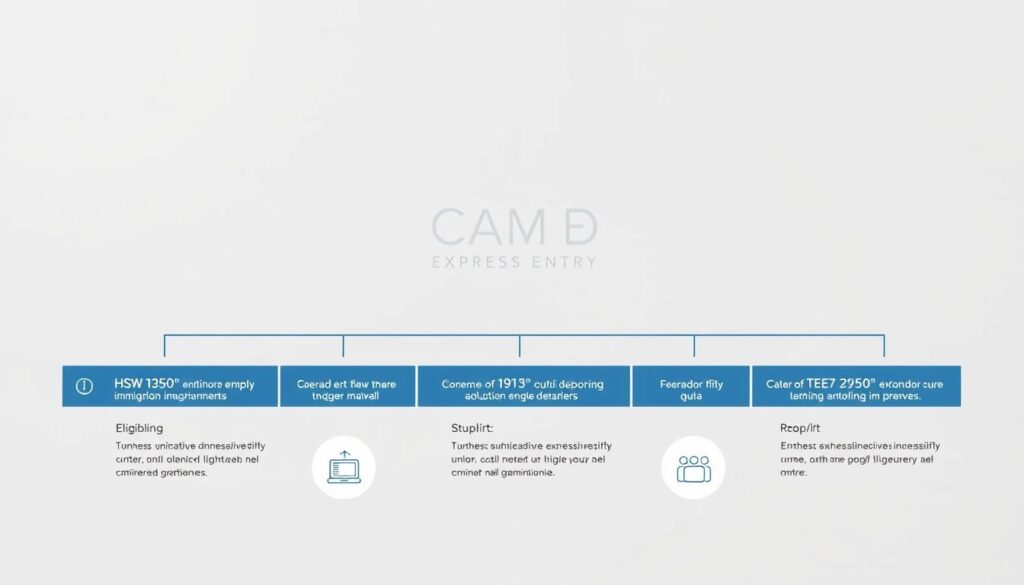
Federal Skilled Worker, Canadian Experience Class, and Skilled Trades
The Federal Skilled Worker Program is the primary pathway for most applicants. It requires one year of continuous skilled work experience in specific occupational categories. You must also score at least 67 points on their selection grid.
For those with Canadian work history, the Canadian Experience Class offers an excellent alternative. This program recognizes your local experience and integrates it into the immigration process.
The Federal Skilled Trades Program caters to professionals with technical expertise. It demands two years of experience in an eligible trade. Candidates also need either a valid job offer or qualification certificate.
Additional Considerations for Arab Applicants
Educational Credential Assessment is crucial for Arab applicants with international degrees. This validation process ensures your qualifications meet Canadian standards. It also adds valuable points to your profile.
Language testing requires careful preparation. Choose accepted tests and aim for scores that maximize your points. Proper documentation of your work experience is equally important for a successful Express Entry application.
Navigating the Express Entry Application Process
Moving from eligibility assessment to confirmation of permanent residence follows a structured timeline with specific requirements. I will guide you through each critical phase to ensure you understand what to expect.

Getting Started with Your Online Profile
Before creating your profile, complete language testing and obtain your Educational Credential Assessment if needed. These documents are essential for accurate point calculation.
Submit your profile on the official government website with precise information. Accuracy here prevents delays or rejection later in the process.
Steps After Entering the Express Entry Pool
Your profile remains active for up to twelve months while you await an invitation. During this period, you’re ranked against other candidates based on comprehensive criteria.
If selected, you typically have sixty days to submit your complete application. This includes medical exams, police certificates, and supporting documentation.
The government aims to process applications within six months. Successful candidates receive confirmation and can then plan their relocation.
Insights into the Comprehensive Ranking System (CRS)
Your ranking in the pool is determined by a sophisticated merit-based framework that evaluates your potential for economic success. This points system was developed using extensive government research on immigrant outcomes.
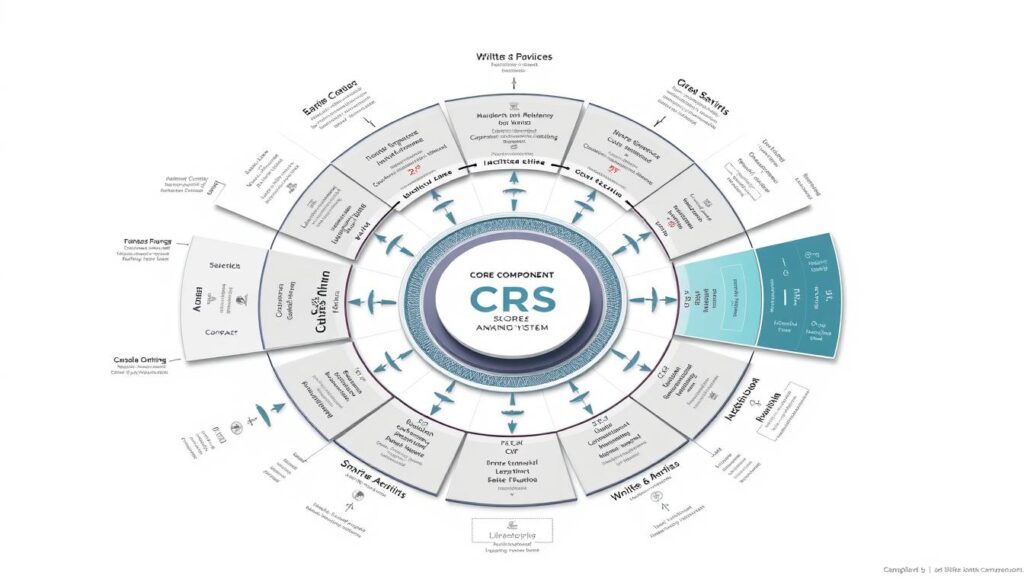
I will break down how this comprehensive ranking system allocates points across different human capital factors. Understanding this structure is crucial for maximizing your profile’s competitiveness.
Key Components of the CRS
The framework assesses multiple factors that correlate with successful integration. Each category contributes to your total points.
| Factor Category | Maximum Points Available | Primary Influence |
|---|---|---|
| Core Human Capital | 500 points | Age, education, language, experience |
| Spouse/Partner Factors | 40 points | Adaptability and combined potential |
| Skill Transferability | 100 points | Education and experience combinations |
| Additional Points | 600 points | Nominations, siblings, Canadian education |
The research clearly shows that immigrants with strong language skills and recognized education achieve faster economic integration.
The Role of Age, Education, and Work Experience
Age significantly impacts your points, with candidates aged 20-29 receiving maximum allocation. This reflects research showing younger immigrants have better long-term outcomes.
Your education level directly influences your score, from secondary diplomas to doctoral degrees. Foreign credentials require proper assessment for point eligibility.
Both Canadian and international work experience contribute to your total. Canadian experience receives additional weight due to its proven correlation with labor market success.
Calculating and Understanding Your CRS Score
Several reliable tools exist to help applicants estimate their comprehensive ranking with precision. I will guide you through the most effective approaches for determining your standing.

Utilizing Free Online Calculators
Three primary methods help you calculate your ranking. Each offers distinct advantages for different users.
The Moving2Canada calculator provides personalized insights beyond basic calculations. It compares your results against recent selection rounds and suggests improvement strategies.
Government tools offer official accuracy but limited guidance. Manual calculation gives deep understanding but requires significant time and expertise.
| Calculation Method | Primary Advantage | Best For | Limitations |
|---|---|---|---|
| Moving2Canada Calculator | Comprehensive guidance and comparisons | First-time applicants seeking full context | Third-party tool, not official government source |
| Official IRCC Tool | Absolute accuracy with current criteria | Verifying results from other calculators | No program eligibility guidance or improvement tips |
| Manual Calculation | Deep understanding of point allocation | Advanced users analyzing specific factors | Time-consuming and error-prone process |
Interpreting Your Results for Improved Chances
Your calculated total reveals your current competitiveness. Compare it against recent selection thresholds to gauge your timing.
Identify areas offering the greatest improvement potential. Focus efforts where small changes yield significant point increases.
Accuracy is critical during this assessment phase. Discrepancies between estimated and actual totals can cause application issues.
Optimizing Your express entry Canada CRS score
Many applicants overlook the interconnected nature of scoring factors that determine their competitive position. Understanding these relationships helps you maximize your total effectively.
Factors That Influence Your Score
Your ranking total depends on several core human capital elements. Age, education level, and work experience form the foundation of your calculation.
Language abilities significantly impact multiple categories within the system. Higher proficiency levels yield substantially more points across different sections.
Understanding the Impact of Spousal and Language Points
Including a spouse or common-law partner affects your available points. Their education, work experience, and language test results contribute to your total.
Sometimes, applying alone yields a higher ranking than including a partner. I recommend calculating both scenarios to determine the optimal approach.
Since March 25, 2025, valid job offers no longer provide additional ranking benefits. However, they remain important for program eligibility requirements.
Maximize your partner’s contribution by ensuring they complete language testing and obtain credential assessments. Proper documentation of their qualifications is essential for accurate point allocation.
Enhancing Your CRS Score: Practical Strategies
Improving your profile’s competitiveness requires a dual approach of immediate actions and future planning. I will outline both quick improvements and strategic investments that can strengthen your position.
Short-Term Techniques to Boost your Score
Retaking language tests can yield significant points increases. Aiming for CLB 9 or higher impacts multiple categories within the ranking system.
Regularly update your profile with new work experience. Additional months or years can push you past important thresholds.
Reassess whether including your partner maximizes your total. Their improved credentials might now add more value to your application.
Long-Term Strategies for Sustained Improvement
Pursuing additional education credentials provides substantial ranking benefits. A master’s degree or higher qualification significantly boosts your profile.
Learning French creates powerful advantages. Bilingual candidates receive bonus points and qualify for special selection categories.
Gaining local experience through temporary permits strengthens your application. This demonstrates adaptability and local market knowledge.
Remember that test results remain valid for two years. Plan your testing schedule strategically to maximize their impact during your journey.
The Impact of Job Offers, Language Proficiency, and Work Experience
The March 2025 update fundamentally altered the strategic importance of Canadian employment offers. While they no longer provide ranking points, valid offers remain essential for program eligibility requirements.
Criteria for Valid Job Offers and LMIA
A qualifying employment offer must be full-time and fall under skilled TEER 0-3 occupations. It requires Labour Market Impact Assessment support or qualify for exemption.
Certain international agreements and intra-company transfers may bypass LMIA requirements. The offer must guarantee one year of employment after obtaining permanent status.
Improving Language Test Performance and Gaining Canadian Experience
Language abilities significantly influence your profile’s competitiveness. Approved tests include IELTS General Training and CELPIP-G for English, with TEF Canada and TCF Canada for French.
Results remain valid for two years and cannot be combined across different test dates. Focus preparation on weaker skill areas and consider professional courses.
Canadian professional history provides substantial advantages. This includes paid, skilled TEER 0-3 occupations performed while physically in the country.
Pathways include post-graduation work permits and temporary foreign worker programs. A thoughtful comprehensive immigration strategy balances these elements effectively.
Leveraging Provincial Nominee Programs (PNP)
Beyond the main economic immigration system lies another crucial pathway that can dramatically boost your chances. Provincial Nominee Programs represent one of the most powerful strategies for skilled workers.
Receiving a nomination from an aligned provincial stream adds an automatic 600 points to your ranking. This virtually guarantees an invitation in the next selection round.
How a PNP Nomination Can Benefit Your Profile
There are two main types of provincial streams. Express Entry-aligned programs integrate directly with the federal system. Non-aligned streams operate independently but still lead to permanent residence.
Each province designs its nominee program to meet local economic needs. They create unique eligibility criteria and occupation lists.
- Research provincial in-demand occupation lists
- Identify streams matching your professional background
- Understand regional labor market priorities
- Monitor provincial nomination quotas and timelines
The application process varies by province. Some require Expressions of Interest, while others accept direct applications. Successful nominees receive documentation to update their profiles.
This regional approach complements federal selection methods. It provides additional opportunities throughout the year.
Additional Considerations for Spouse/Common-Law Partner Profiles
Many applicants underestimate how their partner’s education, work history, and language abilities contribute to their ranking position. Proper documentation of these credentials can significantly boost your profile’s competitiveness.
Maximizing Points Through Spousal Credentials
Your partner’s qualifications directly impact your total points. Their education level, professional background, and language test results all factor into the calculation.
For international degrees, an Educational Credential Assessment from approved agencies is essential. This validation ensures proper point allocation for foreign qualifications.
Canadian work experience must meet specific criteria. It should be paid, full-time or equivalent part-time work in skilled occupations within the last decade.
Language testing provides substantial benefits. Approved test results remain valid for two years and contribute directly to your overall score.
Dependent children do not affect your point total but will receive permanent residence if your application succeeds. Proper documentation of family relationships is crucial throughout the process.
Conclusion
Your success in navigating Canada’s skilled worker selection system depends on implementing the strategies we’ve discussed throughout this guide. Regular express entry draws provide multiple opportunities throughout the year for qualified candidates.
Remember that your initial ranking serves as a starting point, not a final determination. You can significantly improve your position through language enhancement, additional education, or provincial nominations. The system evaluates applicants based on economic potential rather than country of origin.
Research confirms that immigrants selected through this merit-based approach achieve strong labor market outcomes. If this pathway presents challenges initially, Canada offers numerous alternative immigration programs to explore.
With proper preparation and persistence, you can successfully achieve permanent residence and build a prosperous future through Canada’s economic immigration system.