

Did you know that over 80% of applications from international professionals are rejected by Canadian employers before they even reach the hiring manager? The reason is often a simple mismatch in expectations. Your application materials might be perfect for your home country, but they can fail to meet the unique standards of the North American job market.
For Arab professionals, this challenge is especially real. The way you present your skills and experience matters deeply. Canadian hiring managers look for specific details and a clear, concise structure. This guide is designed to bridge that gap. I will show you exactly how to craft a document that gets noticed for the right reasons.
My goal is to provide you with practical, actionable steps. You will learn the core differences in style and content. We will cover everything from formatting basics to important cultural considerations. This ensures you understand both the technical and contextual aspects of creating a successful application.
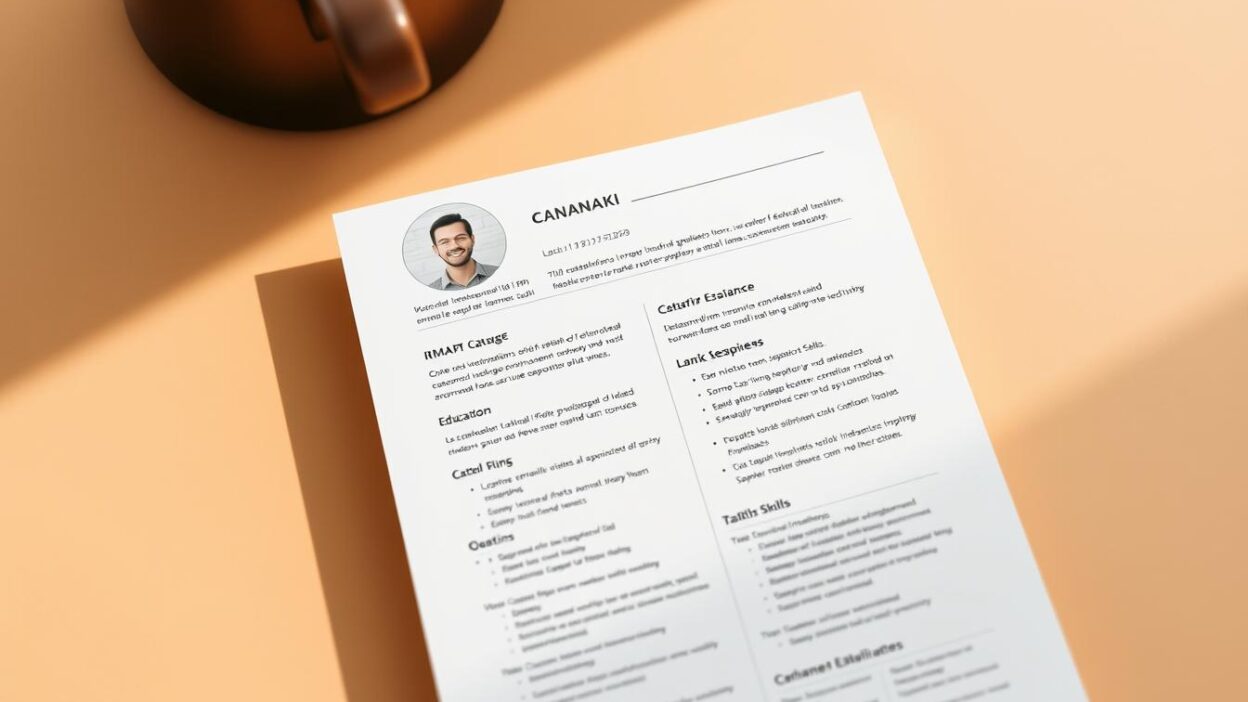
To make it easy, I have designed five free templates specifically for Arab professionals. These templates help you present your qualifications effectively. They align with what Canadian hiring managers expect to see. By the end of this guide, you will know how to tailor your document for any job you want.
Key Takeaways
- Understanding the local format is critical for getting your application seen by employers.
- Canadian job applications focus heavily on skills, achievements, and quantifiable results.
- Personal details common in other regions, like photos or marital status, are typically excluded.
- Using action-oriented language and a strong professional summary makes a powerful first impression.
- Tailoring your document for each specific job opportunity is a standard and expected practice.
- This comprehensive guide to the Canadian resume format provides the foundational knowledge you need to succeed.
Introduction
Securing employment in Canada requires understanding the unique dynamics of how companies evaluate candidates. The process differs significantly from what many international professionals expect.
Overview of the Canadian Job Market
Canada’s employment landscape welcomes skilled workers with diverse backgrounds. The country’s immigration-friendly policies create numerous opportunities across various industries. Many organizations use automated systems to screen applications efficiently.
Employers typically expect concise, focused documents that highlight relevant qualifications. They value clarity and direct communication about skills and achievements. Understanding these preferences is crucial for making a positive first impression.
Why a Tailored Document Matters for Arab Professionals
Simply translating an existing application often leads to rejection. Hiring managers look for specific formatting and content that aligns with local standards. Cultural differences in communication style and privacy expectations significantly impact success rates.
Adapting your professional profile demonstrates respect for Canadian workplace norms. It shows genuine interest in integrating into the business environment. This attention to detail can distinguish your application from others.
Arab professionals bring valuable international experience and multilingual abilities. Presenting these strengths effectively requires understanding what information employers consider relevant. Investing time in proper preparation ensures your qualifications receive the attention they deserve.
Mastering the Canadian Resume Format for Success
Navigating the Canadian employment landscape demands a strategic approach to presenting your qualifications through a carefully structured professional document. The right format ensures your application gets past automated systems and captures human attention.
| Section Order | Essential Component | Key Purpose |
|---|---|---|
| 1 | Contact Information | Provide clear ways for employers to reach you |
| 2 | Professional Summary | Highlight your most relevant qualifications upfront |
| 3 | Work Experience | Showcase your career progression and achievements |
| 4 | Education | Display your academic background and credentials |
| 5 | Skills Section | Highlight technical and soft abilities |
Your document should typically span one to two pages. Recent graduates often succeed with a single page, while experienced professionals may need two. The reverse-chronological approach places your most recent experience first.
“Proper formatting isn’t just about aesthetics—it’s about creating a logical flow that guides recruiters through your most compelling qualifications.”
Use British English spellings like “colour” and “centre” rather than American variations. Dates follow the YYYY-MM-DD format, and measurements use metric units. These details show cultural awareness.
Exclude personal information like photos, age, marital status, or religious affiliation. Canadian hiring laws protect against discrimination, so focus strictly on professional qualifications. Save your final document as a PDF to preserve formatting across devices.
Comparing Canadian, US, and European Resume Standards
The way you present your qualifications can vary significantly depending on whether you’re targeting opportunities in Canada, the US, or Europe. Understanding these regional differences ensures your application meets local expectations.
Key differences in language and layout
North American and European employment documents follow distinct conventions. Canadian and US formats share similar structures but differ in language preferences.
British English spellings like “colour” and “centre” are standard for Canadian applications. US documents use American English variations. European CVs often include personal details that North American employers avoid.
| Region | Document Length | Personal Information | Language Requirements |
|---|---|---|---|
| Canada | 1-2 pages | Excludes photos, age, marital status | British English; French in Quebec |
| United States | 1-2 pages | Excludes personal details | American English |
| Europe | 2+ pages common | Often includes photos, birth dates | Local language; multiple languages valued |

What recruiters look for in each format
Canadian hiring managers prioritize concise, achievement-focused content. They value relevance over comprehensive career histories. This differs from European expectations where detailed backgrounds are common.
In Quebec, bilingual abilities become valuable differentiators. European recruiters may expect photos and extensive educational details. North American employers focus strictly on professional qualifications due to anti-discrimination laws.
Understanding these distinctions helps you create targeted applications. For comprehensive guidance on adapting your professional profile, explore this detailed guide to the Canadian resume format.
Essential Components of a Canadian Resume
Every successful job application in Canada is built upon a clear, standardized structure. I will guide you through the five mandatory parts that create a complete professional profile.
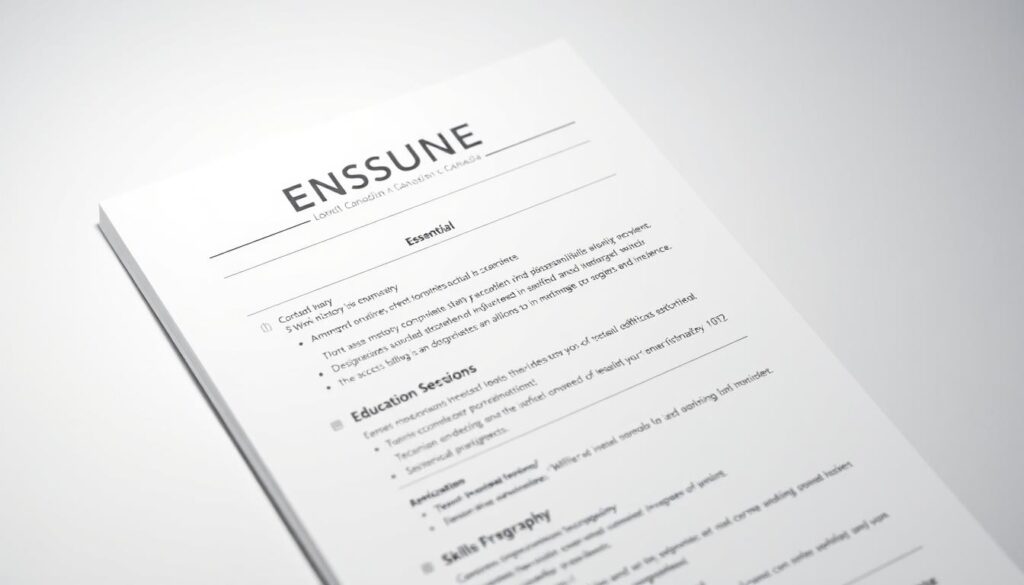
The sequence of these sections is critical. Recruiters scan documents quickly and expect information in a specific order. This logical flow highlights your most relevant qualifications first.
| Section Order | Core Component | Primary Function |
|---|---|---|
| 1 | Header & Contact Information | Provides essential details for employers to reach you |
| 2 | Professional Summary | Offers a powerful, concise overview of your key strengths |
| 3 | Work Experience | Showcases career progression and measurable achievements |
| 4 | Education | Displays academic credentials and relevant certifications |
| 5 | Skills | Highlights both technical abilities and interpersonal strengths |
For recent graduates, it may be beneficial to place the education section before professional experience. This emphasizes your academic preparation when work history is limited.
Beyond these core parts, optional sections can significantly strengthen your application. Details like languages, volunteer work, or relevant personal projects are particularly valuable for international professionals.
“A well-structured document tells a compelling story of your professional journey, making it easy for hiring managers to see your value.”
Remember, while the framework is standard, the content within each part must be tailored for every job you target. In the following sections, I will provide detailed guidance for crafting each component effectively.
Craft Your Professional Header and Contact Information
Creating an effective contact section is the first step toward ensuring your application receives proper attention. This area provides essential details about who you are and how employers can reach you quickly.
Best practices for contact details
Start with your full name in a larger font size, typically 20-24 points. This makes you easily identifiable. Place your contact information directly beneath it in a clear, organized manner.
Include a professional email address that uses your name. Avoid casual or outdated addresses. Provide a phone number with the proper country code if applying from abroad.
List your city and province to show your location. Adding your LinkedIn profile URL demonstrates digital professionalism. Many hiring managers review these profiles during the screening process.
For certain roles, consider including optional elements. A personal website or online portfolio can strengthen your application. Developers might add GitHub links, while designers could include Behance profiles.
Remember to exclude personal details like photos, birth dates, or marital status. Canadian employment laws protect against discrimination based on these factors.
Here’s a clear example of a properly formatted header:
AHMED AL-MANSURI
ahmed.al-mansuri@email.com | +1 (416) 555-1234
Toronto, Ontario | linkedin.com/in/ahmedal-mansuri
Developing a Strong Professional Summary and Objective
Crafting a powerful introduction to your qualifications is crucial for capturing recruiter attention immediately. This opening section sets the tone for your entire application and determines whether hiring managers continue reading.

Tips for writing a compelling summary
A professional summary should be 2-3 sentences highlighting your key strengths. Start with your professional title and years of experience. Then showcase measurable achievements using specific numbers and percentages.
Incorporate relevant keywords from the job description to align with employer needs. Focus on skills that match the position you’re applying for. Use action-oriented language to demonstrate your impact.
For example: “Marketing specialist with six years in digital strategy. Increased campaign ROI by 40% through data-driven solutions. Eager to contribute to company growth while relocating.”
When to use an objective instead of a summary
Choose a career objective when you’re changing fields or have limited work experience. This approach emphasizes your potential and transferable skills rather than past achievements.
Recent graduates should focus on education, certifications, and enthusiasm to learn. Career changers can highlight relevant skills from previous roles. Always connect your goals to the specific company’s mission.
An effective objective might state: “IT professional seeking to leverage problem-solving skills. Passionate about cybersecurity and eager to collaborate with forward-thinking teams in Canada.”
Showcasing Work Experience Effectively
Transforming your career history into compelling evidence of your capabilities requires strategic presentation. This section demonstrates your professional growth and relevance to the position you’re applying for.

Reverse-chronological ordering and its benefits
Listing your work experience in reverse-chronological order immediately shows your current skill level. Hiring managers can quickly assess your most recent accomplishments and career trajectory.
This format places your strongest qualifications at the top where they receive maximum attention. It creates a logical flow that highlights your professional development over time.
Utilizing action verbs and bullet points
Begin each achievement statement with powerful action verbs like managed, developed, implemented, or led. These words create dynamic descriptions that showcase your initiative.
Use the Laszlo Bock formula: “accomplished X as measured by Y by doing Z.” For example: “Increased team productivity by 25% through streamlined workflow implementation.”
Bullet points improve readability and help hiring managers scan for relevant skills. Focus on quantifiable achievements rather than routine responsibilities. Include 4-6 points for recent positions and 2-3 for older roles.
When presenting international experience, provide context about company size or industry position. This helps employers understand the scope of your responsibilities and achievements.
Educational Background and Skill Highlights
A well-presented education section and a strategically curated skills list work together to build a complete picture of your qualifications. These components provide concrete evidence of your training and inherent abilities.

I will guide you through structuring these parts to meet employer expectations effectively.
Structuring your education section
List your academic credentials in reverse-chronological order. Start with your most recent or highest degree first.
For each entry, include the degree name, institution, its location, and your graduation date. If you are a recent graduate with a high GPA (3.5+), include it to demonstrate academic excellence.
Omit high school details if you have a university degree. This keeps the focus on your highest level of achievement.
For those with international credentials, you may add a brief note about the institution’s reputation. This provides helpful context for the hiring manager.
Recent graduates can strengthen this part by listing relevant coursework or academic honors. This shows direct application of learned skills to the target job.
Balancing hard and soft skills to impress hiring managers
Employers look for a balance of technical and interpersonal abilities. Your skills section should reflect this dual focus.
Hard skills are teachable, measurable competencies. Soft skills are interpersonal traits that define how you work.
Do not list every skill you possess. Carefully select those that directly match the job description. This tailored approach performs better with both automated systems and human reviewers.
Here is a clear comparison to guide your selection:
| Skill Type | Primary Focus | Common Examples | Best For |
|---|---|---|---|
| Hard Skills | Technical proficiency and specific knowledge | Python, Data Analysis, AutoCAD, Project Management | Demonstrating direct job capability |
| Soft Skills | Interpersonal dynamics and work style | Communication, Leadership, Problem-Solving, Adaptability | Showing cultural fit and teamwork potential |
By presenting a balanced mix, you show you have both the technical know-how and the personal qualities to succeed in the workplace.
How to Format a Canadian Resume
Attention to visual details in your job application can determine whether it gets read or rejected. I will guide you through essential formatting principles that create a professional impression.
Design guidelines and font choices
Select clean, professional fonts like Arial or Calibri for optimal readability. Use 10-12 point size for body text and 14-16 points for headings.
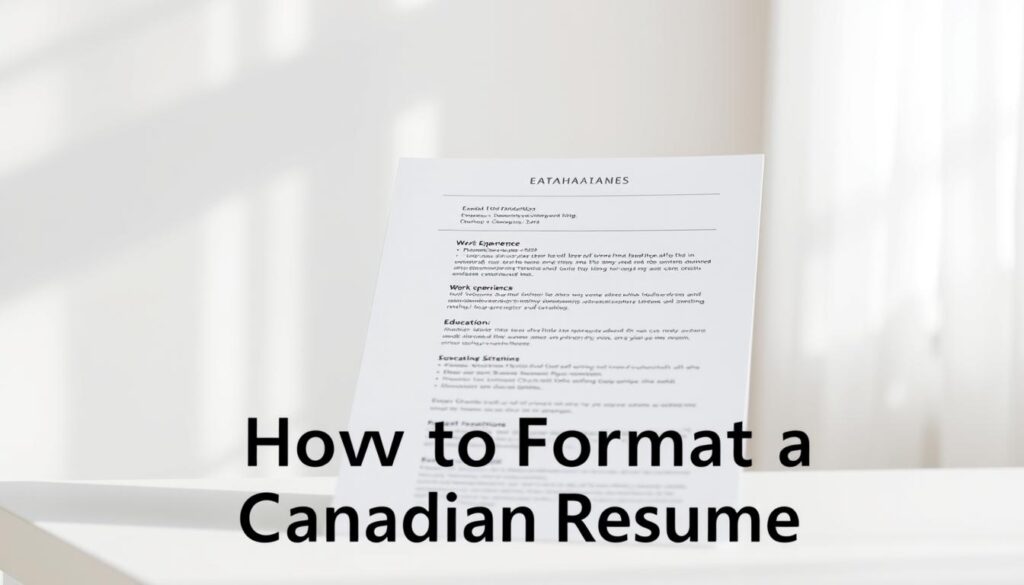
Maintain one-inch margins on all sides with single or 1.15 line spacing. This creates a balanced layout that doesn’t appear crowded. Your name should stand out at 20-24 points.
Use bold text for section headings like Experience and Education. A subtle color accent in headings can add visual interest without appearing unprofessional.
Save your document as a PDF to preserve formatting across different systems. Use North American letter size (8.5 x 11 inches) rather than A4 paper dimensions.
Strategic white space guides the hiring manager’s eye to important information. Consistent formatting throughout your application demonstrates attention to detail.
Tailoring Your Resume to the Job Description and Canadian Market
Customizing your professional document for each specific opportunity has become a non-negotiable requirement for success. Generic submissions rarely capture the attention of modern hiring teams.

When you’re applying for multiple positions, taking the time to analyze each job description thoroughly is crucial. This approach demonstrates genuine interest and shows you understand what the employer truly needs.
Keyword integration and customizing your content
Many companies use automated screening systems that scan for specific terminology. Your application must include exact phrases from the posting to pass initial filters.
Study the job description carefully to identify priority skills and qualifications. Look for repeated terms and required capabilities. These become your integration targets.
Focus on achievements that align with the role’s core requirements. Reposition your experience to emphasize relevant aspects. This strategic emphasis makes your background compelling for each specific job.
| Aspect | Generic Approach | Tailored Strategy |
|---|---|---|
| Keyword Usage | Broad, general terms | Specific phrases from job description |
| Content Focus | All accomplishments equally weighted | Emphasis on role-relevant achievements |
| ATS Performance | Often filtered out | Higher match rate with employer needs |
| Hiring Manager Appeal | Generic impression | Clear role alignment demonstrated |
“The difference between a good candidate and the right candidate often comes down to how well they’ve tailored their application to show they understand the specific role and company culture.”
Maintain authenticity while customizing content. Never misrepresent your qualifications. Instead, highlight different aspects of your experience for various positions you’re applying to.
Leveraging Free Templates and Additional Sections for a Standout Resume
Going beyond the basic structure by incorporating specialized templates and optional sections can set your application apart from competitors. These elements provide the finishing touches that demonstrate thorough preparation.
Overview of free Canadian resume templates
I designed five professional templates specifically for Arab professionals targeting opportunities in Canada. Each template serves different career levels and industries.
The templates feature ATS-friendly formatting with clear visual hierarchy. They use North American letter size and professional design elements. This ensures compatibility with employer systems.
Customization is straightforward while maintaining professional standards. You can adjust sections to highlight your unique qualifications effectively.
Optional sections to boost your application
Strategic additional sections can significantly strengthen your professional profile. Language skills are particularly valuable, especially French proficiency.
Volunteer work and certifications demonstrate well-rounded experience. Personal projects show initiative and practical application of skills.
Keep in mind that relevance is crucial. Only include sections that directly support your target position. Avoid unnecessary personal details that don’t contribute to your professional narrative.
Conclusion
As you prepare to submit your application, remember that a powerful resume is only half the equation for success in the Canadian hiring process. A well-crafted cover letter serves as its essential partner, allowing you to elaborate on achievements and demonstrate your genuine interest in the specific role.
Always tailor both documents for each position you’re applying for. This customization shows the hiring manager you understand their unique needs. It transforms a generic submission into a targeted pitch for why you’re the ideal candidate.
Investing time in writing a compelling cover letter pays significant dividends. It complements your resume by connecting your background directly to the employer’s requirements. This complete approach significantly improves your chances of securing an interview.
The free templates I’ve provided eliminate formatting concerns, letting you focus on content that showcases your abilities. While adapting to these standards requires effort, mastering them opens doors to rewarding career opportunities.
Your dedication to presenting your qualifications effectively will set you apart in this welcoming, diverse job market.