

Did you know a small blue booklet grants access to over 180 destinations worldwide? Holding this document places you among the top ten most powerful travelers globally. This ranking reflects incredible freedom and opportunity.
I am excited to share this comprehensive guide for 2025. It details where I, as a citizen, can explore without prior visa arrangements. This detailed resource confirms the extensive reach of our travel document.
My focus is on providing clear, current information. This is especially helpful for Arab-Canadians planning international trips. We can confidently discover which nations welcome us with simplified entry processes.
I will break down the various permission types. These range from straightforward visa-free entry to quick electronic authorizations. The goal is to make your journey planning smooth and informed.
Key Takeaways
- The Canadian travel document offers entry to a vast number of global destinations.
- Its high international ranking signifies exceptional travel freedom.
- This guide provides specific information for Arab-Canadian travelers.
- Different entry permissions, including visa-on-arrival, will be explained.
- All information is based on official, up-to-date sources for 2025.
- Planning becomes simpler with a clear understanding of entry requirements.
- Electronic Travel Authorizations (eTAs) are required for some destinations.
Overview of Canadian Passport Privileges
My national identity document consistently ranks among the elite in global travel authority indexes. This standing reflects the document’s exceptional power and the convenience it offers holders. The privileges extend far beyond simple border crossings.
Global Passport Rankings and Benefits
According to 2025 data, my travel document holds impressive positions across major indexes. It ranks 7th in the Global Passport Index and 9th in the Henley Passport Index. These placements signify strong international recognition.
The security features are equally remarkable. Artistic pages reveal hidden Canadian symbols under UV light. This advanced technology demonstrates the document’s sophistication.
Travel Freedom Insights for Canadian Citizens
I enjoy entry to approximately 184 destinations without prior visa arrangements. This extensive access represents remarkable global mobility. The convenience spans multiple continents and regions.
Being perceived as a low-risk traveler streamlines immigration processes worldwide. Minimal documentation and faster processing are common benefits. Dual citizenship policies further enhance travel options for eligible citizens.
Visa-Free Countries for Canadian Passport Holders
Direct access to numerous international locations eliminates the need for pre-travel authorization processes. This privilege opens doors to spontaneous adventures across the globe.
My travel document grants entry to 141 nations without advance paperwork. The official requirements confirm this extensive access.

What It Means to Travel Without a Visa
Border-free entry simplifies international journeys significantly. I present my valid identification at immigration checkpoints.
Officers grant admission based solely on my citizenship status. No application fees or waiting periods are involved.
“The freedom to explore without bureaucratic barriers represents true global citizenship.”
Top Destinations and Regional Highlights
Different regions offer varying stay durations for visitors. European nations typically allow 90 days within any 180-day period.
Caribbean destinations provide extended access opportunities. The Bahamas welcomes travelers for up to eight months.
| Region | Number of Destinations | Maximum Stay Example |
|---|---|---|
| Europe | 44 | 90 days (Schengen Area) |
| Caribbean | 18 | 8 months (Bahamas) |
| Asia | 25 | 1 year (Georgia) |
| South America | 14 | 90 days (Brazil) |
Georgia offers an exceptional one-year stay period. Ireland and Barbados provide six-month visits.
Canadian passport visa free countries: In-Depth List
Having a structured breakdown of accessible nations simplifies my journey planning significantly. This organized approach helps me identify regional clusters for efficient multi-destination trips.
Essential Destinations for 2025
My comprehensive compilation highlights key regions with varying stay periods. European nations typically offer 90-day access within any 180-day window.
Asian locations present diverse opportunities. Japan requires pre-registration while South Korea grants 90-day entry. Thailand welcomes visitors for 60 days without advance paperwork.
South American destinations like Argentina and Chile provide 90-day stays. Mexico stands out with a generous 180-day allowance for tourism purposes.
Why This List Matters for Arab-Canadians
This detailed compilation holds particular significance for those with Middle Eastern heritage. The document often provides easier entry compared to passports from many Arab nations.
Understanding these privileges helps me appreciate the mobility advantages of my citizenship. It enables confident planning for both business and leisure journeys across continents.
The regional organization allows me to design culturally rich itineraries. I can seamlessly combine European cultural tours with Middle Eastern family visits.
Visa on Arrival Destinations for Canadian Citizens
Many destinations allow me to complete the entry process directly at their borders. This option is available in 35 nations worldwide. It offers a great balance of convenience and flexibility for last-minute travel plans.
The system simplifies travel to many fascinating places. I do not need embassy visits before my trip. Authorization is granted at the airport or land crossing.
How the Visa on Arrival Process Works
Upon arrival, I approach a dedicated immigration counter. I complete an application form and present my travel document. Supporting papers like hotel bookings are often required.
Payment of a fee is the final step. Costs vary and are usually payable in local currency or U.S. dollars. The entire procedure typically takes under 30 minutes.
Practical Examples and Case Studies
Preparation is key for a smooth experience. I always carry passport photos and exact change. Having my return flight details ready speeds things up.
In Indonesia, the process is very efficient. I pay approximately 42 CAD and receive a 30-day stay permission. Queues can be longer during peak seasons.
It is crucial to check specific entry points. For example, Bangladesh only offers this service at major airports. Land borders require different arrangements.
| Destination | Stay Duration | Approximate Fee | Key Note |
|---|---|---|---|
| Armenia | 120 days | 50 CAD | Exceptionally long stay |
| Cambodia | 30 days | 30-40 USD | Simple process |
| Ethiopia | Up to 90 days | Varies | Available at Addis Ababa airport |
| Indonesia | 30 days | 42 CAD | Renewable once |
| Comoros | 45 days | 30-50 USD | Fee in EUR or USD |
This method is a fantastic option for spontaneous explorers. It opens doors to incredible cultures with minimal pre-planning. Understanding the steps ensures a hassle-free start to any adventure.
E-Visa and Electronic Travel Authorization (ETA) Explained
Digital authorization systems have transformed how I prepare for international journeys. While both an e-Visa and an Electronic Travel Authorization (ETA) are obtained online, they serve distinct purposes. Grasping this difference is key to a smooth application process.
Differences Between E-Visa and ETA
An e-Visa is a full authorization that I secure electronically instead of visiting an embassy. It requires a detailed application, document uploads, and a fee. I then receive approval via email, which I print and present upon arrival.
An ETA, however, is a simpler pre-screening for visa-exempt travelers. It involves minimal information and is often approved in minutes. This authorization is electronically linked to my travel document.
Application Procedures and Tips
For an e-Visa, I provide comprehensive details about my trip, including accommodation and finances. Processing times vary from hours to several days. I can obtain these for 27 countries, such as Vietnam and Azerbaijan, which often grant a 30-day stay.
The ETA process is far quicker, needing just basic passport data. I have access to 8 nations this way, including Australia for 90-day visits. My top tip is to apply for e-Visas at least a week before departure, while ETAs can be secured closer to the travel date.
I always print a copy of the approval, even though it’s digital. This ensures I have physical documentation if requested by immigration officials.
Understanding Visa Requirements and Entry Regulations
Understanding entry rules requires looking beyond simple visa classifications. Many nations impose additional conditions that I must satisfy regardless of my authorization status. These regulations ensure compliance with local laws and security protocols.
Entry Requirements for Extended Stays
When planning longer visits, I encounter specific documentation demands. Proof of sufficient funds is common, typically $50-100 per day. Return tickets and accommodation confirmations are also standard requests.
My travel document must maintain validity for six months beyond my intended stay. Some destinations require two or three blank pages for stamps. These basic requirements apply even when no advance authorization is needed.
Eighteen nations mandate obtaining authorization through embassies before travel. This includes China, Russia, and several countries with political challenges. The process involves detailed paperwork and longer processing times.
Documentation and Security Guidelines
Health documentation becomes crucial for certain regions. Yellow fever vaccination certificates are mandatory for entry into Angola and Benin. I obtain these certificates at specialized travel health clinics.
Security measures vary significantly across borders. Argentina fingerprints and photographs all visitors upon arrival. Other nations may require registration with local authorities during my stay.
I always verify current conditions through official government sources. Regulations can change rapidly due to health emergencies or policy updates. Comprehensive travel insurance has become increasingly important as an entry requirement.
Traveling in the Schengen Area with a Canadian Passport
Exploring Europe’s Schengen Area offers incredible convenience for my international journeys. This border-free zone encompasses 27 nations that I can visit without additional authorization. The system simplifies multi-country European trips significantly.
Once I receive an entry stamp at my first point of entry, I can move freely between member states. This eliminates border checks when traveling from France to Germany or Italy. The seamless movement represents one of the greatest travel advantages in modern Europe.
Schengen Stay Duration and Policies
I must carefully follow the 90/180 rule governing my stay duration. This means I can spend up to 90 days within any rolling 180-day period across all Schengen countries. The calculation is based on my movement history rather than fixed dates.
If I enjoy 30 days in Spain, I have only 60 remaining days for other nations within that window. This collective allowance applies to all member states. Some Nordic regions previously had different policies but are now standardizing.
Online calculators help me track my days to avoid overstaying penalties. Compliance is essential since violations can lead to fines and future entry restrictions. The United Kingdom and Ireland operate outside this system but offer separate access.
My documentation must include proof of sufficient funds and accommodation details. The validity period of my travel document should extend at least three months beyond my planned departure. These requirements ensure smooth border crossings throughout the region.
Exploring Visa Regulations in South America and the Caribbean
South America and the Caribbean present incredible opportunities for extended exploration without complex entry procedures. The welcoming policies across these regions make planning multi-country journeys particularly straightforward for my travel needs.

Visa-Free and Minimal Requirement Countries
I can explore virtually all of South America with favorable entry conditions. Argentina grants 90-day access with fingerprinting upon arrival, while Chile offers similar duration. Colombia provides up to 180 days, though it requires an $85 fee.
Brazil recently changed its policy, now requiring an electronic authorization system. This convenient online process still allows 90-day stays. Other nations like Ecuador and Peru offer straightforward 90-day access.
The Caribbean islands provide some of the longest stay periods available anywhere. The Bahamas welcomes visitors for eight months, while Barbados and Dominica offer six-month stays. Antigua and Barbuda grants 180-day access.
“The combination of accessible entry requirements across both regions makes extended travel adventures entirely feasible.”
Most countries require only valid documentation, proof of onward travel, and sufficient funds. This tourist-friendly approach simplifies my planning process significantly. I appreciate how these policies enable cultural immersion experiences.
When traveling through South America, I prepare for thorough questioning about my plans. Countries like Argentina photograph and fingerprint all visitors. Despite Venezuela’s technical access, government advisories recommend avoiding travel there due to instability.
The proximity to the United States creates excellent opportunities for comprehensive American journeys. This regional accessibility is well-documented in this comprehensive guide for travelers.
Navigating Entry Into Asian and Middle Eastern Countries
Asia and the Middle East offer distinct travel landscapes that I navigate with a blend of my national status and cultural awareness. For citizens of Canada, these regions provide a mix of straightforward access and specific procedural requirements.
My journey planning involves understanding both official policies and local customs. This dual perspective is especially valuable for those with heritage connections to the area.
Travel Tips for Arab-Canadian Passport Holders
I benefit from convenient entry to many key destinations. In Asia, nations like South Korea grant 90-day stays, while Thailand allows 60 days without prior paperwork.
The Middle East is particularly accessible. I can obtain a visa on arrival in places like the UAE, Jordan, and Saudi Arabia. This is ideal for family visits or business trips.
It is crucial to research cultural norms before travel. Dress codes and local laws can vary significantly. My documentation should always be in order to ensure a smooth process.
Essential Permits and Cultural Considerations
Some nations have unique rules. For example, citizens with GCC residence permits gain extra benefits, like 90-day visa-free entry to Armenia starting in 2025.
I remain aware that while my status facilitates entry, some countries may ask additional questions based on travel history. Preparation and respect for local traditions make every journey more rewarding.
The combination of my citizenship and cultural familiarity creates unique opportunities for meaningful experiences across these diverse regions.
Travel Scenarios: Passport Holders and Border Entry Procedures
Navigating international borders requires understanding the practical steps I’ll encounter upon arrival. Each nation has specific protocols that ensure security while facilitating legitimate travel.
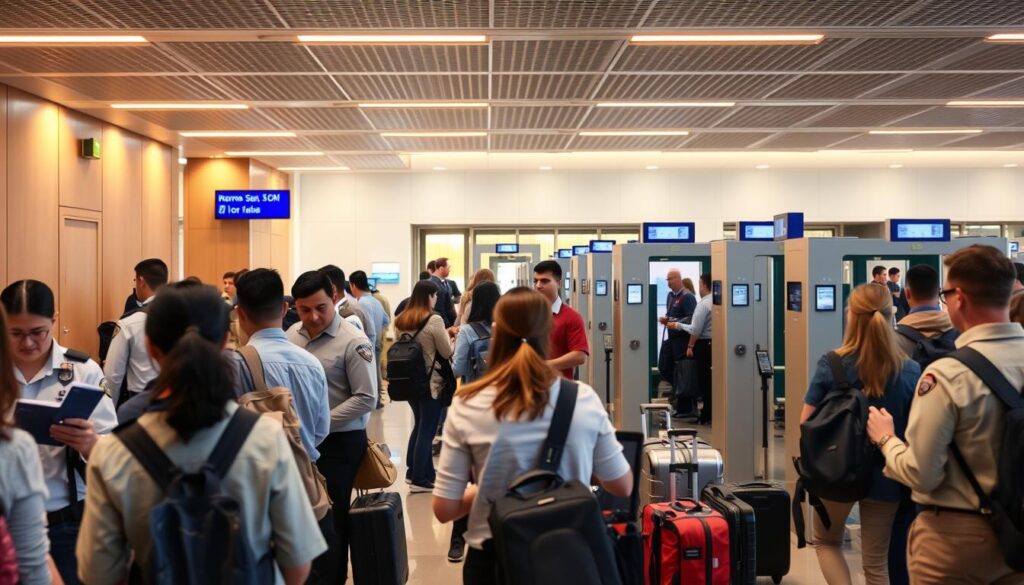
The immigration process typically begins when I join the appropriate queue at the airport. Many destinations offer expedited lines for nationals from certain nations.
Customs and Immigration Processes
I present my documentation to the border officer and answer standard questions. These inquiries cover my visit’s purpose, accommodation plans, and intended stay duration.
Honest, concise responses help streamline the procedure. Some locations employ advanced biometric systems for enhanced security.
Argentina and the United States fingerprint and photograph all visitors during entry. Australia’s SmartGate system allows automated processing for eligible travelers.
After clearing immigration, I proceed to customs declaration. This involves declaring restricted items like large cash amounts or agricultural products.
Some nations require registration with local authorities within specific timeframes. Failure to comply can result in fines upon departure.
I always carry printed confirmations of reservations and return tickets. This preparation ensures smooth border crossings worldwide.
Impact of Global Events on Visa Regulations (2025)
The interconnected nature of our world means that political and health events directly influence border policies. My planning must account for this dynamic environment.
Health, Safety, and Travel Advisories
I consult official advisories before any international journey. These resources highlight security risks in various regions.
Some destinations with legal entry permission carry significant dangers. The government warns against visits to Afghanistan, Haiti, and Iraq due to conflict and terrorism.
Health considerations remain important since the pandemic. Proof of vaccination or insurance may be required for entry.
How Policies Evolve Over Time
Entry requirements change based on diplomatic relations and security concerns. Brazil recently reinstated authorization needs after a period of open access.
I monitor real-time updates through government websites. This helps me adapt when policies shift unexpectedly.
| Advisory Level | Meaning | Example Destinations |
|---|---|---|
| Exercise Normal Precautions | Standard security awareness | Most European nations |
| Exercise High Degree of Caution | Increased vigilance required | Some Asian countries |
| Avoid Non-Essential Travel | Significant risks present | Parts of Middle East |
| Avoid All Travel | Extreme danger | Active conflict zones |
Legal permission to enter does not guarantee safety. I evaluate conditions independently for each planned trip.
Government Influence on Visa Policies and Canadian Politics
Behind every border crossing lies a complex web of political agreements that shape my travel experiences. The extensive access I enjoy to various nations results from careful diplomatic work by my government.

Global Affairs Canada, currently led by Minister Anita Anand, plays a crucial role in negotiating these arrangements. Their work ensures favorable conditions for citizens traveling internationally.
Policy Decisions and Global Standing
Reciprocal agreements form the foundation of my travel privileges. When my nation offers visa-free entry to others, they often extend the same courtesy to citizens like me.
Canada’s political stability and commitment to democratic principles enhance our international reputation. This positive standing translates into smoother entry processes across many countries.
The Charter of Rights and Freedoms provides constitutional protections that foreign governments recognize. This legal framework contributes to the trust other nations place in Canadian travelers.
Dual citizenship policies offer additional mobility options for many individuals. These decisions reflect Canada’s inclusive approach to global citizenship and international relations.
Planning Your Next Trip: Tips for Visa-Free Adventures
With a clear understanding of entry requirements, my focus shifts to the practical steps for a seamless journey. A well-organized plan turns exciting destinations into stress-free realities.
My systematic approach ensures I meet all regulations and can fully enjoy the experience. This preparation is crucial for maximizing the benefits of my travel privileges.
Pre-Travel Checklists and Best Practices
I begin every trip by consulting my trusted guide and destination list. This helps me confirm the latest entry rules for my chosen location.
My essential pre-departure checks are detailed below. They cover documentation, security, and cultural readiness.
| Checklist Item | Purpose | Key Detail |
|---|---|---|
| Document Validity | Ensure entry eligibility | Six months validity minimum |
| Travel Insurance | Medical and trip protection | Required by some nations |
| Accommodation Proof | Meet entry requirements | Printed confirmation needed |
| Government Registration | Emergency contact | Via official travel service |
I always research local customs and learn basic phrases. This shows respect and greatly enriches my visits.
Accommodations and Booking Recommendations
Securing lodgings early provides peace of mind and necessary documentation. I use reputable platforms with clear cancellation policies.
Reading recent reviews helps me choose suitable places. I verify that confirmations include all details immigration officials might request.
When citizens travel, being prepared is the ultimate guide to adventure. Responsible exploration honors the trust placed in us as visitors.
Conclusion
This exploration of global mobility has revealed the remarkable opportunities available to me as a holder of this travel document. My Canadian passport is a key that unlocks diverse cultures and experiences across the globe.
I recognize this privilege comes with a duty to be a respectful ambassador. Understanding local laws and customs is as crucial as knowing entry rules.
For those with heritage in the Arab world, this citizenship offers a distinct level of travel freedom. It enables connections with family and culture on a truly global scale.
I am empowered to plan adventures with confidence, from spontaneous trips to carefully organized journeys. The world is genuinely accessible, waiting to be explored responsibly and enthusiastically.