
Did you know that a community of people with roots in the Arab world has more than tripled in size in just two decades? This isn’t a small group anymore. The latest official count shows nearly 700,000 individuals who identify with this heritage.
This remarkable growth, detailed in the 2021 census, means this group now makes up a significant 1.9% of the nation’s people. I find this shift important to understand. It reflects a dynamic change in the country’s social fabric.
The settlement pattern is also fascinating. Over 80% of these individuals call Ontario or Quebec home. They have built vibrant communities in cities like Toronto and Montreal. This concentration creates unique cultural hubs.
Members of this community trace their ancestry to many different places. These include Lebanon, Syria, Egypt, and Morocco. Each group brings its own rich traditions and experiences.
In this article, I will explore this fascinating demographic story. We’ll look at historical trends, current distributions, and the many contributions of arab canadians. This analysis provides a data-driven look at an integral part of modern society.
Key Takeaways
- The community has experienced rapid growth, more than tripling since 2001.
- According to the 2021 census, this group represents 1.9% of the total people in the country.
- The vast majority reside in just two provinces: Ontario and Quebec.
- Arab canadians are a highly diverse group with origins across the Arab world.
- This analysis uses official data to provide an accurate demographic breakdown.
- Understanding this group is key to understanding the nation’s evolving identity.
Introduction and Overview
Recent census data paints a compelling picture of how this cultural group has established itself throughout various regions. The numbers tell a story of remarkable growth and settlement patterns that deserve closer examination.
Key Statistics and Census Insights
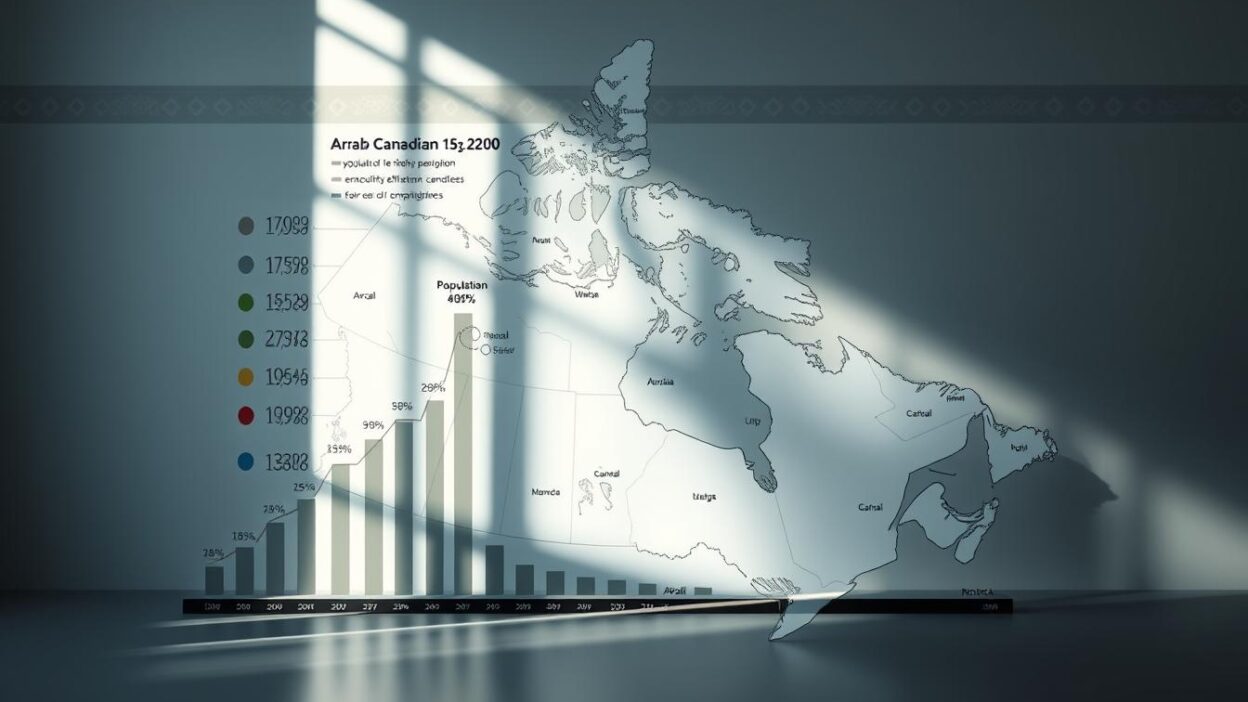
According to Statistics Canada, the community has experienced extraordinary expansion. From 2001 to 2021, the count surged from approximately 195,000 to nearly 700,000 individuals.
This represents growth from 0.7% to 1.9% of the total demographic composition. The Canadian census reveals a consistent upward trajectory every five years.

General Demographic Landscape
Major urban centers serve as primary settlement destinations. Cities like Toronto and Montreal host significant communities, offering economic opportunities and cultural networks.
The linguistic diversity within this group is notable. While Arabic dialects provide cultural connection, members also speak English and French, facilitating integration.
People from various countries across the Middle East and North Africa contribute to this rich tapestry. Each brings unique traditions and perspectives to different provinces and regions.
New immigrants and established families alike continue to shape this dynamic demographic landscape. Their stories reflect the evolving nature of multicultural society.
Historical Context of Arab Immigration in Canada
Historical records reveal that Arab immigration to Canadian shores commenced in 1882, initiating a transformative cultural exchange. This movement unfolded in distinct phases, each shaped by unique global circumstances.
First and Second Waves of Immigrants
The initial wave of arab immigrants consisted primarily of Syrian-Lebanese Christians. They sought refuge from Ottoman oppression and economic hardship. By 1912, approximately 7,000 individuals had established themselves across urban centers.
Many early arrivals began as peddlers, traveling between towns to build businesses. This first wave arab immigrants laid the groundwork for future community development.
The second wave arab migration occurred between 1941-1951. Postwar upheaval and regional conflicts prompted this movement. This group included more diverse religious backgrounds and higher educational attainment.
Historical Challenges and Milestones
Early immigrants faced significant obstacles. The 1920s brought immigration restrictions and economic changes that affected traditional peddling work. The stock market crash further challenged community businesses.
Despite these hurdles, the community persevered. Organizations like the canadian arab federation emerged to support identity formation and document this rich history. Their work helps preserve the legacy of these pioneering arab immigrants.
This immigration story reflects resilience and adaptation. People from various countries arab world contributed to building vibrant communities across the nation.
Demographic Breakdown by Province and Census Data
Detailed census analysis reveals distinct geographic concentrations of this cultural community across the nation. The 2021 data shows clear patterns in where people have chosen to settle.

Provincial Distribution and Regional Trends
Quebec and Ontario host the vast majority of arab canadians, with over 564,000 individuals calling these provinces home. This represents more than 80% of the total community.
Quebec shows the highest percentage at 3.3% of its provincial population. Ontario follows with 2.0%. Western provinces like Alberta have seen significant growth, reflecting economic opportunities.
The regional breakdown includes:
- Alberta: 69,505 individuals (1.6%)
- British Columbia: 28,010 (0.6%)
- Nova Scotia: 10,610 (1.1%)
Ethnic and Religious Composition
When examining national origins, Lebanese Canadians form the largest single group with 219,555 people. Other significant groups include those from Algeria, Morocco, and saudi arabia.
Religious affiliation has shifted noticeably over time. According to statistics canada, the Muslim proportion has grown from 44% in 2001 to approximately 59% in the latest census.
Christian representation decreased from 44% to about 26% during the same period. This change reflects evolving immigration patterns from different regions.
Understanding the Arab Population Canada Trends
Statistical trends from multiple census periods highlight a consistent upward trajectory that demands closer analysis. I find the growth patterns particularly revealing when examined across different timeframes.
Population Growth Over Time
The numerical increase has been extraordinary. From 2001 to 2021, the community expanded by 256%. This represents one of the fastest-growing demographic groups in the nation.
Several factors drove this expansion. Family reunification programs brought many newcomers. Refugee resettlement initiatives, especially during the Syrian crisis, contributed significantly. The 2016 year saw 35,000 Syrian permanent residents arrive.

| Census Year | Number of Individuals | Percentage of Total | Growth Rate |
|---|---|---|---|
| 2001 | 194,685 | 0.7% | Baseline |
| 2011 | 380,620 | 1.2% | 95.4% |
| 2016 | 523,235 | 1.5% | 37.5% |
| 2021 | 694,015 | 1.9% | 32.6% |
Comparative Analysis with National Census Figures
The growth rate significantly outpaces the national average. While the general canadian population grows steadily, this community’s expansion is more rapid.
Postwar immigrants brought different characteristics than earlier waves. They were better educated and more professionally qualified. This influenced integration patterns and socioeconomic profiles.
Current immigration policies suggest continued growth. The nation maintains robust targets for newcomers. Political and economic challenges in source countries also drive emigration.
Cultural Identity and Community Contributions
Navigating dual cultural identities presents both challenges and opportunities for individuals maintaining connections to their ancestral roots. I find the academic concept of “double consciousness” particularly revealing when examining this dynamic.
Evolution of Arab Canadian Identity
Research shows that major world events significantly influenced self-perception. Following the 9/11 attacks, some individuals felt pressured to suppress their heritage. A pre-2000 Edmonton survey revealed gender and religious differences in identity expression.
Professor Wisam Kh. Abdul-Jabbar described how people often balance Canadian identity with cultural traditions. This creates what researcher Madona Mokbel called “dichotomous perceptions” of self.

Children growing up in this environment develop complex ethnic identity formations. They embrace values of multiculturalism while maintaining connections to the arabic language and family traditions.
Notable Figures and Impact on Society
This community has produced exceptional leaders across all sectors. Their achievements demonstrate how cultural heritage enriches national life.
| Sector | Notable Figure | Background | Contribution |
|---|---|---|---|
| Business | Kevin O’Leary | Lebanese descent | Entrepreneur, TV personality |
| Politics | Omar Alghabra | Syrian descent | Member of Parliament |
| Arts | Mena Massoud | Egyptian descent | Actor (Aladdin) |
| Sports | Nazem Kadri | Lebanese descent | NHL Stanley Cup champion |
These individuals serve as role models for younger generations. They show how maintaining connections to the arab world complements active participation in society.
Challenges, Integration, and Future Prospects
Integrating into a new society presents unique challenges that affect both newcomers and subsequent generations. I find that arab canadians navigate complex dynamics between preserving cultural traditions and adapting to local norms.

Social Integration and Identity Issues
Many arab immigrants appreciate Canadian values like justice and respect for human rights. However, differences in family structures sometimes create tension. Traditional expectations from their countries of origin may conflict with local social norms.
Second-generation individuals often develop what researchers call “double consciousness.” They balance their arab canadian identity with mainstream canadian identity. This affects how children navigate school environments and social links.
Influence of Immigration Policies and Media
Government policies significantly shape integration levels. Refugee programs and family reunification have brought diverse groups from various countries. Media representation also plays a crucial role in how the broader society perceives this group.
| Integration Factor | Challenge | Support Mechanism | Outcome |
|---|---|---|---|
| Cultural Preservation | Maintaining language | Weekend heritage classes | Bilingual children |
| Social Adaptation | Different family norms | Community organizations | Hybrid identities |
| Religious Practice | Finding spaces | New religious institutions | Active congregations |
| Economic Integration | Credential recognition | Professional networks | Diverse employment |
Preservation of Cultural Traditions
Community efforts successfully maintain cultural heritage. The arabic language thrives through specialized programs and family use. Religious institutions serve as centers for both spiritual and cultural activities.
Food, music, and artistic expressions create important bridges between generations. These traditions help people maintain connections to their arab origin while building their ethnic identity in a new context.
Successful integration involves developing a dual identity that honors both heritage and new citizenship.
Future prospects appear promising as demographic growth continues. Increasing representation across sectors suggests evolving acceptance and contribution patterns.
Conclusion
This exploration reveals how cultural preservation and national participation can coexist harmoniously. The nearly 700,000 individuals in this community represent one of the nation’s most dynamic demographic groups.
Arab Canadians have contributed significantly across business, politics, arts, and sports. Their success demonstrates the strength of the multicultural model. Communities maintain distinct traditions while building strong national loyalty.
The canadian arab experience shows that integration doesn’t require assimilation. People from across the world bring diverse perspectives that enrich every region. This growing number of arab canadians will continue shaping the country’s future.
Understanding this demographic story helps appreciate the rich cultural tapestry that makes this nation unique.