
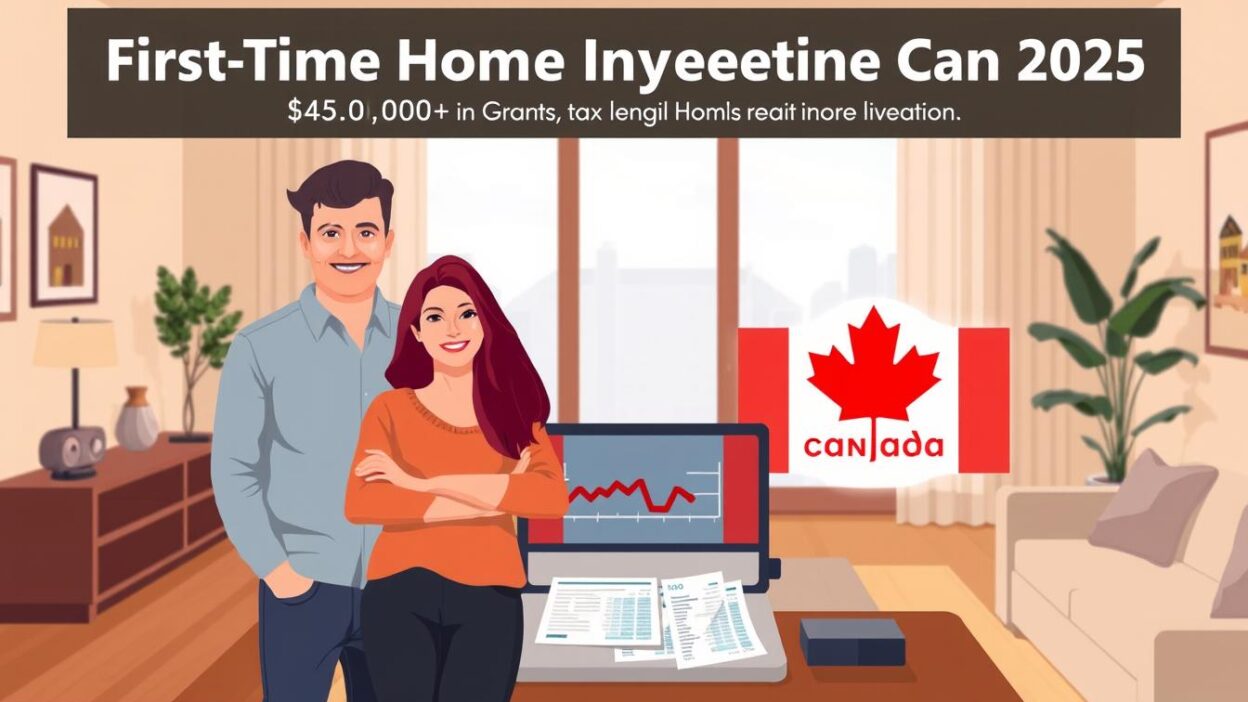
Did you know that qualifying individuals could access over $40,000 in combined financial support for their initial property purchase? This substantial figure represents the potential power of available government initiatives.
Purchasing a property for the very first time is a monumental step. It brings excitement but also significant financial hurdles. Many lack the equity from a prior sale to fund this major investment.
To address this, various programs exist to reduce upfront costs. I will guide you through this complex landscape. My goal is to make comparing your options simple and clear.
This resource breaks down federal plans, provincial aids, and key mortgage factors. It is designed for new purchasers and newcomers alike. Understanding these details is crucial for an informed and empowered journey.
Key Takeaways
- Combined financial support can exceed $40,000 for eligible individuals.
- Multiple government programs are designed to reduce initial purchase costs.
- Key federal initiatives include specialized savings accounts and withdrawal plans.
- Provincial and territorial assistance varies and can provide additional benefits.
- Understanding eligibility criteria is essential for maximizing available support.
- A clear comparison of benefits helps in making informed decisions.
- This guide covers federal, provincial, and practical mortgage considerations.
Understanding First Time Home Buyer Incentives Canada
Navigating the financial landscape of an initial property acquisition is made easier with targeted government support. These initiatives are designed to address the most significant barriers new purchasers face.

Overview of Incentives and Benefits
A diverse portfolio of plans exists to assist new purchasers. Key federal options include specialized savings accounts and withdrawal plans from retirement funds.
Provincial and municipal aids add another layer of support. These often come as rebates on taxes or direct financial assistance.
Each program has unique features and maximum values. Understanding this variety is crucial for maximizing your potential benefits.
How These Programs Reduce Upfront Costs
These plans work by directly lowering the initial cash required. They provide tax deductions, rebates, and access to savings.
For example, a land transfer tax rebate can save thousands at closing. A tax credit reduces your final tax bill.
Using a savings account or retirement plan withdrawal boosts your down payment power. This combination makes property ownership more accessible.
| Program Type | Maximum Value | Key Feature |
|---|---|---|
| First Home Savings Account (FHSA) | $40,000 per person | Tax-deductible contributions, no repayment |
| RRSP Home Buyers’ Plan (HBP) | $60,000 per person | Tax-free withdrawal, 15-year repayment |
| Land Transfer Tax Rebate (e.g., ON/BC) | Up to $8,000 | Rebate on a major closing cost |
| First-Time Home Buyers’ Tax Credit | $1,500 | Non-refundable credit on tax return |
Key Government Programs and Grants for First-Time Home Buyers
Three primary initiatives form the foundation of support available to eligible purchasers. I will detail the mechanics of each to clarify their distinct advantages.

Details on the First Home Savings Account (FHSA)
Introduced in April 2023, the FHSA is a powerful savings account. It combines benefits from other registered plans.
You can contribute up to $8,000 annually toward your first home savings. The lifetime limit is $40,000. Unlike some plans, withdrawals for a qualifying purchase are tax-free and require no repayment.
Insights on the RRSP Home Buyers’ Plan (HBP)
The HBP allows a withdrawal of up to $60,000 from your retirement savings. This is not taxed at the time of withdrawal, boosting your down payment.
This amount must be repaid over 15 years. A recent change offers a grace period for withdrawals made by the end of 2025.
Land Transfer Tax Rebates and Other Credits
Land transfer tax is a significant closing cost, often 0.5% to 2.0% of the price. Several provinces offer rebates to reduce this burden.
For example, Ontario provides a $4,000 rebate. British Columbia offers up to $8,000. These programs provide direct financial relief at closing.
| Program | Maximum Value | Key Distinction |
|---|---|---|
| First Home Savings Account (FHSA) | $40,000 | Tax-free withdrawal with no repayment required |
| RRSP Home Buyers’ Plan (HBP) | $60,000 | Tax-free withdrawal with a 15-year repayment term |
| Land Transfer Tax Rebate | Up to $8,000 | Direct rebate on a major provincial/municipal fee |
Navigating the FHSA and RRSP Home Buyers’ Plan
Effectively managing the FHSA and HBP requires a clear understanding of their distinct tax rules and financial implications. I will break down the critical operational details for each program.
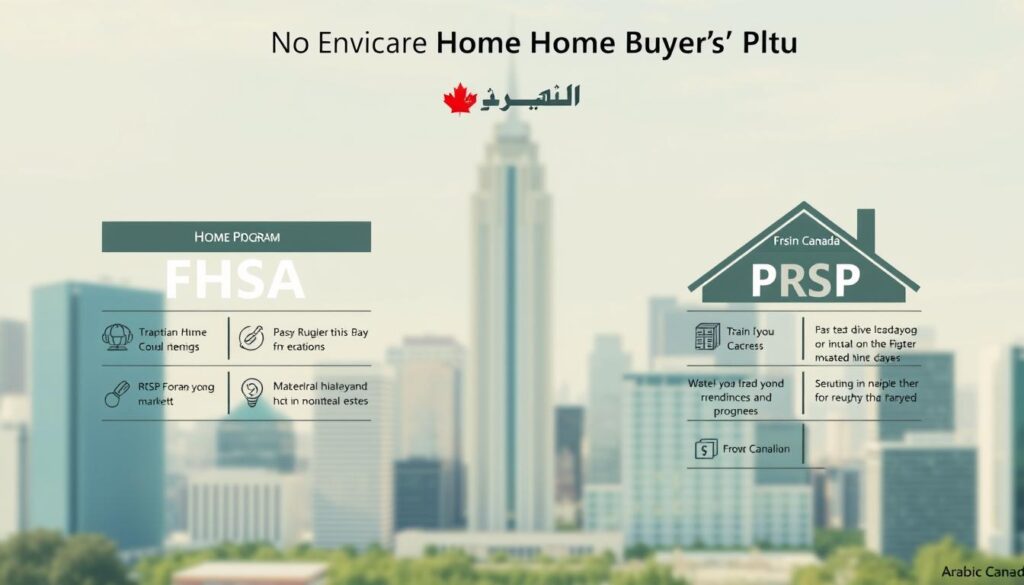
Contribution Limits and Tax Benefits of the FHSA
The First Home Savings Account offers a powerful dual tax advantage. Your contributions are tax-deductible, similar to an RRSP.
Withdrawals for a qualifying purchase are entirely tax-free, like a TFSA. This includes all investment growth within the account.
If your plans change, you can transfer savings to an RRSP or RRIF without penalty. Opening an account requires confirming your eligibility and providing your SIN.
Withdrawal Guidelines and Repayment Options for the HBP
For the Home Buyers’ Plan, your RRSP funds must be deposited for at least 90 days. You also need a signed agreement to buy a qualifying primary residence.
The withdrawn amount must be repaid over 15 years. Missing an annual payment adds that sum to your taxable income.
Using retirement savings now provides immediate funds but can reduce your long-term wealth accumulation.
This trade-off is significant. Carefully weigh the boost to your down payment against the impact on your future retirement security.
| Feature | First Home Savings Account (FHSA) | RRSP Home Buyers’ Plan (HBP) |
|---|---|---|
| Tax on Withdrawal | Tax-free | Tax-free (if repaid) |
| Repayment Required | No | Yes, over 15 years |
| Impact on Retirement | Flexible transfer options | Reduces compounded growth |
| Key Advantage | Simplicity and no future obligation | Access to a larger existing savings pool |
Provincial Programs, Rebates, and Tax Credits
Provincial assistance programs create a diverse landscape of financial support that varies significantly by region. Each jurisdiction tailors its offerings to address local market conditions and purchaser needs.

Provincial Variations and Eligibility Requirements
I find that regional programs differ substantially in their structure and benefits. Some focus on tax credits while others provide direct rebates or down payment assistance.
Eligibility criteria often include income limits, purchase price caps, and residency requirements. Researching your specific province’s rules is essential for maximizing available support.
Local Rebate Options in Ontario, BC, PEI, and More
British Columbia’s program offers full or partial exemption from the property transfer tax. The benefit depends on the purchase price and location.
Ontario provides a Land Transfer Tax Refund of up to $4,000. Toronto adds an additional municipal rebate.
Prince Edward Island offers a full rebate for properties under $200,000. This makes it particularly attractive in lower-priced markets.
Quebec supplements federal programs with an additional tax credit worth up to $750. Atlantic provinces like Newfoundland provide grants covering legal costs.
Prairie provinces have their own approaches. Manitoba offers rebates while Saskatchewan provides non-refundable credits. Alberta uses property tax rebates since no land transfer tax exists.
Eligibility and Qualification Criteria for First-Time Buyers
Each assistance program has distinct eligibility criteria that determine who can participate. Understanding these requirements is essential before pursuing any financial support.
Income, Residency, and Primary Residence Requirements
Basic qualification standards require Canadian residency and being at least 18 years old. You cannot have owned a residential property in the last four calendar years.
An important exception exists for marital separation. After living apart for 90 days, you may regain your status. All programs require the purchase to become your main dwelling.
Specific plans have additional rules. The FHSA has an age limit of 71 years. The HBP requires RRSP funds to be deposited for 90 days minimum.
Newcomers need documentation like permanent resident cards. Lenders typically request proof of income and employment history. Provincial programs often include extra conditions.
| Program | Residency Requirement | Ownership History | Additional Conditions |
|---|---|---|---|
| FHSA | Canadian resident | No ownership in previous 4 years | Age 18-71 |
| HBP | Canadian resident | No ownership in previous 4 years | RRSP funds held 90+ days |
| Provincial Rebates | Province-specific | Varies by program | Often includes price caps |
Always verify specific eligibility criteria for each program. Missing one requirement can disqualify you from valuable support.
Mortgage, Down Payment, and Additional Costs Considerations
Mortgage structuring and associated costs represent critical components of your overall financial strategy. I will guide you through the essential elements beyond the purchase price itself.
Understanding Down Payment Requirements
Minimum down payments follow a tiered system based on the property’s value. For dwellings under $500,000, you need at least 5%. Between $500,000 and $1,499,999, it’s 5% of the first $500,000 plus 10% of the remaining amount.
Properties priced at $1,500,000 or more require a 20% minimum. This structure ensures proportional investment based on the acquisition’s scale.
Mortgage Default Insurance and Amortization Options
When your down payment is less than 20%, mortgage default insurance becomes mandatory. Premium rates decrease as your investment increases: 4.20% for 5-9.99%, 3.30% for 10-14.99%, and 3.00% for 15-19.99%.
A significant recent change allows extending amortization to 30 years for eligible purchasers. This reduces monthly payments but increases total interest over the loan’s lifetime.
Budgeting for Closing Costs and Additional Fees
Closing expenses typically add 1.5-4% to your total investment. Land transfer tax represents the largest single cost, ranging from 0.5-2.0% of the purchase price.
Budget an additional 2-3% for inspections, legal fees, and title insurance. Consider ongoing costs like property taxes and insurance when assessing affordability.
Thorough financial planning ensures you’re prepared for both immediate and long-term obligations.
I recommend using official calculators and consulting specialists to understand your complete financial picture before commitment.
Real-Life Tips for First-Time Home Buyers and Newcomers
Your personal financial timeline deserves careful consideration before committing to a major purchase. I find that many people overlook how property acquisition fits into their broader life plans.

Create a five-year project list including education, travel, or business goals. This helps determine if renting’s flexibility better suits your current situation than home ownership.
Steps to Financial and Market Readiness
With stable income and solid savings, clearly define your property needs. Consider bedroom count, parking, and dwelling type preferences.
Research local real estate markets to understand typical purchase price ranges. This ensures properties meeting your criteria also fit your budget.
I recommend obtaining mortgage pre-approval during your search. Some lenders lock rates for 120 days, protecting against increases.
Always hire a qualified inspector before finalizing any acquisition. They identify hidden issues that could lead to expensive repairs later.
Expert Advice and Personal Insights
Newcomers should familiarize themselves with Canadian loan requirements. These typically include income verification and immigration status documentation.
Build Canadian credit history using secured cards with timely payments. This improves your eligibility for better mortgage terms.
Plan for additional costs like currency conversion fees. Also prepare for specific tax implications in certain provinces.
Current economic factors affect borrowing costs. Bond yields around 3.07% keep fixed rates elevated, making financial preparation even more crucial.
Conclusion
Strategic utilization of available financial tools can transform the dream of property ownership into reality. The collective value of federal and provincial support exceeds $40,000 for eligible individuals.
I emphasize combining programs like the first home savings account with regional benefits such as land transfer tax relief. This approach significantly reduces your initial payment requirements.
Understanding specific eligibility criteria is essential for maximizing benefits. Each program has unique qualifications that affect your overall financial strategy.
Consulting with mortgage specialists helps create a personalized plan. Their expertise ensures you leverage all available resources effectively.
The effort to navigate these programs yields substantial rewards. It makes the transition to home ownership more accessible and financially sustainable.
FAQ
What is the First Home Savings Account (FHSA) and how does it work?
How much can I withdraw from my RRSP under the Home Buyers’ Plan?
Am I eligible for a land transfer tax rebate in Ontario?
What is the minimum down payment required for a property in Canada?
FAQ
What is the First Home Savings Account (FHSA) and how does it work?
The FHSA is a registered plan designed to help Canadians save for their initial property purchase. I can contribute up to ,000 annually, with a lifetime limit of ,000. Contributions are tax-deductible, and withdrawals for a qualifying acquisition are entirely tax-free.
How much can I withdraw from my RRSP under the Home Buyers’ Plan?
Under the HBP, I am eligible to withdraw up to ,000 from my Registered Retirement Savings Plan to finance my primary residence. This amount must be repaid to my RRSP over a 15-year period to avoid tax penalties.
Am I eligible for a land transfer tax rebate in Ontario?
Yes, as a qualifying purchaser in Ontario, I may be eligible for a maximum rebate of ,000 on the provincial land transfer tax. The eligibility criteria require that I occupy the home as my principal residence within nine months of the purchase.
What is the minimum down payment required for a property in Canada?
The minimum down payment depends on the purchase price. For a house costing 0,000 or less, I need 5% down. For the portion between 0,000 and
FAQ
What is the First Home Savings Account (FHSA) and how does it work?
The FHSA is a registered plan designed to help Canadians save for their initial property purchase. I can contribute up to $8,000 annually, with a lifetime limit of $40,000. Contributions are tax-deductible, and withdrawals for a qualifying acquisition are entirely tax-free.
How much can I withdraw from my RRSP under the Home Buyers’ Plan?
Under the HBP, I am eligible to withdraw up to $35,000 from my Registered Retirement Savings Plan to finance my primary residence. This amount must be repaid to my RRSP over a 15-year period to avoid tax penalties.
Am I eligible for a land transfer tax rebate in Ontario?
Yes, as a qualifying purchaser in Ontario, I may be eligible for a maximum rebate of $4,000 on the provincial land transfer tax. The eligibility criteria require that I occupy the home as my principal residence within nine months of the purchase.
What is the minimum down payment required for a property in Canada?
The minimum down payment depends on the purchase price. For a house costing $500,000 or less, I need 5% down. For the portion between $500,000 and $1 million, a 10% down payment is required. Properties over $1 million require a 20% down payment.
Do these incentives apply if I am buying a home with someone who already owns property?
Generally, no. To qualify as a first-time buyer, I must not have owned a home in the last four years. If my spouse or partner has owned a property within that period, I would typically be disqualified from most programs.
Are there specific programs for newcomers to Canada?
While many national programs require Canadian residency, some lenders offer specialized mortgage products for newcomers. These may accept alternative forms of credit history and require a smaller down payment, though they are not direct government incentives.
What is mortgage default insurance and when is it required?
This insurance is mandatory when my down payment is less than 20% of the property’s value. It protects the lender, not me, and the premium is added to my mortgage loan. This insurance is provided by companies like CMHC, Sagen, and Canada Guaranty.
million, a 10% down payment is required. Properties over
FAQ
What is the First Home Savings Account (FHSA) and how does it work?
The FHSA is a registered plan designed to help Canadians save for their initial property purchase. I can contribute up to $8,000 annually, with a lifetime limit of $40,000. Contributions are tax-deductible, and withdrawals for a qualifying acquisition are entirely tax-free.
How much can I withdraw from my RRSP under the Home Buyers’ Plan?
Under the HBP, I am eligible to withdraw up to $35,000 from my Registered Retirement Savings Plan to finance my primary residence. This amount must be repaid to my RRSP over a 15-year period to avoid tax penalties.
Am I eligible for a land transfer tax rebate in Ontario?
Yes, as a qualifying purchaser in Ontario, I may be eligible for a maximum rebate of $4,000 on the provincial land transfer tax. The eligibility criteria require that I occupy the home as my principal residence within nine months of the purchase.
What is the minimum down payment required for a property in Canada?
The minimum down payment depends on the purchase price. For a house costing $500,000 or less, I need 5% down. For the portion between $500,000 and $1 million, a 10% down payment is required. Properties over $1 million require a 20% down payment.
Do these incentives apply if I am buying a home with someone who already owns property?
Generally, no. To qualify as a first-time buyer, I must not have owned a home in the last four years. If my spouse or partner has owned a property within that period, I would typically be disqualified from most programs.
Are there specific programs for newcomers to Canada?
While many national programs require Canadian residency, some lenders offer specialized mortgage products for newcomers. These may accept alternative forms of credit history and require a smaller down payment, though they are not direct government incentives.
What is mortgage default insurance and when is it required?
This insurance is mandatory when my down payment is less than 20% of the property’s value. It protects the lender, not me, and the premium is added to my mortgage loan. This insurance is provided by companies like CMHC, Sagen, and Canada Guaranty.
million require a 20% down payment.
Do these incentives apply if I am buying a home with someone who already owns property?
Generally, no. To qualify as a first-time buyer, I must not have owned a home in the last four years. If my spouse or partner has owned a property within that period, I would typically be disqualified from most programs.
Are there specific programs for newcomers to Canada?
While many national programs require Canadian residency, some lenders offer specialized mortgage products for newcomers. These may accept alternative forms of credit history and require a smaller down payment, though they are not direct government incentives.
What is mortgage default insurance and when is it required?
This insurance is mandatory when my down payment is less than 20% of the property’s value. It protects the lender, not me, and the premium is added to my mortgage loan. This insurance is provided by companies like CMHC, Sagen, and Canada Guaranty.
FAQ
What is the First Home Savings Account (FHSA) and how does it work?
The FHSA is a registered plan designed to help Canadians save for their initial property purchase. I can contribute up to ,000 annually, with a lifetime limit of ,000. Contributions are tax-deductible, and withdrawals for a qualifying acquisition are entirely tax-free.
How much can I withdraw from my RRSP under the Home Buyers’ Plan?
Under the HBP, I am eligible to withdraw up to ,000 from my Registered Retirement Savings Plan to finance my primary residence. This amount must be repaid to my RRSP over a 15-year period to avoid tax penalties.
Am I eligible for a land transfer tax rebate in Ontario?
Yes, as a qualifying purchaser in Ontario, I may be eligible for a maximum rebate of ,000 on the provincial land transfer tax. The eligibility criteria require that I occupy the home as my principal residence within nine months of the purchase.
What is the minimum down payment required for a property in Canada?
The minimum down payment depends on the purchase price. For a house costing 0,000 or less, I need 5% down. For the portion between 0,000 and
FAQ
What is the First Home Savings Account (FHSA) and how does it work?
The FHSA is a registered plan designed to help Canadians save for their initial property purchase. I can contribute up to $8,000 annually, with a lifetime limit of $40,000. Contributions are tax-deductible, and withdrawals for a qualifying acquisition are entirely tax-free.
How much can I withdraw from my RRSP under the Home Buyers’ Plan?
Under the HBP, I am eligible to withdraw up to $35,000 from my Registered Retirement Savings Plan to finance my primary residence. This amount must be repaid to my RRSP over a 15-year period to avoid tax penalties.
Am I eligible for a land transfer tax rebate in Ontario?
Yes, as a qualifying purchaser in Ontario, I may be eligible for a maximum rebate of $4,000 on the provincial land transfer tax. The eligibility criteria require that I occupy the home as my principal residence within nine months of the purchase.
What is the minimum down payment required for a property in Canada?
The minimum down payment depends on the purchase price. For a house costing $500,000 or less, I need 5% down. For the portion between $500,000 and $1 million, a 10% down payment is required. Properties over $1 million require a 20% down payment.
Do these incentives apply if I am buying a home with someone who already owns property?
Generally, no. To qualify as a first-time buyer, I must not have owned a home in the last four years. If my spouse or partner has owned a property within that period, I would typically be disqualified from most programs.
Are there specific programs for newcomers to Canada?
While many national programs require Canadian residency, some lenders offer specialized mortgage products for newcomers. These may accept alternative forms of credit history and require a smaller down payment, though they are not direct government incentives.
What is mortgage default insurance and when is it required?
This insurance is mandatory when my down payment is less than 20% of the property’s value. It protects the lender, not me, and the premium is added to my mortgage loan. This insurance is provided by companies like CMHC, Sagen, and Canada Guaranty.
million, a 10% down payment is required. Properties over
FAQ
What is the First Home Savings Account (FHSA) and how does it work?
The FHSA is a registered plan designed to help Canadians save for their initial property purchase. I can contribute up to $8,000 annually, with a lifetime limit of $40,000. Contributions are tax-deductible, and withdrawals for a qualifying acquisition are entirely tax-free.
How much can I withdraw from my RRSP under the Home Buyers’ Plan?
Under the HBP, I am eligible to withdraw up to $35,000 from my Registered Retirement Savings Plan to finance my primary residence. This amount must be repaid to my RRSP over a 15-year period to avoid tax penalties.
Am I eligible for a land transfer tax rebate in Ontario?
Yes, as a qualifying purchaser in Ontario, I may be eligible for a maximum rebate of $4,000 on the provincial land transfer tax. The eligibility criteria require that I occupy the home as my principal residence within nine months of the purchase.
What is the minimum down payment required for a property in Canada?
The minimum down payment depends on the purchase price. For a house costing $500,000 or less, I need 5% down. For the portion between $500,000 and $1 million, a 10% down payment is required. Properties over $1 million require a 20% down payment.
Do these incentives apply if I am buying a home with someone who already owns property?
Generally, no. To qualify as a first-time buyer, I must not have owned a home in the last four years. If my spouse or partner has owned a property within that period, I would typically be disqualified from most programs.
Are there specific programs for newcomers to Canada?
While many national programs require Canadian residency, some lenders offer specialized mortgage products for newcomers. These may accept alternative forms of credit history and require a smaller down payment, though they are not direct government incentives.
What is mortgage default insurance and when is it required?
This insurance is mandatory when my down payment is less than 20% of the property’s value. It protects the lender, not me, and the premium is added to my mortgage loan. This insurance is provided by companies like CMHC, Sagen, and Canada Guaranty.
million require a 20% down payment.
Do these incentives apply if I am buying a home with someone who already owns property?
Generally, no. To qualify as a first-time buyer, I must not have owned a home in the last four years. If my spouse or partner has owned a property within that period, I would typically be disqualified from most programs.
Are there specific programs for newcomers to Canada?
While many national programs require Canadian residency, some lenders offer specialized mortgage products for newcomers. These may accept alternative forms of credit history and require a smaller down payment, though they are not direct government incentives.
What is mortgage default insurance and when is it required?
This insurance is mandatory when my down payment is less than 20% of the property’s value. It protects the lender, not me, and the premium is added to my mortgage loan. This insurance is provided by companies like CMHC, Sagen, and Canada Guaranty.
FAQ
What is the First Home Savings Account (FHSA) and how does it work?
The FHSA is a registered plan designed to help Canadians save for their initial property purchase. I can contribute up to ,000 annually, with a lifetime limit of ,000. Contributions are tax-deductible, and withdrawals for a qualifying acquisition are entirely tax-free.
How much can I withdraw from my RRSP under the Home Buyers’ Plan?
Under the HBP, I am eligible to withdraw up to ,000 from my Registered Retirement Savings Plan to finance my primary residence. This amount must be repaid to my RRSP over a 15-year period to avoid tax penalties.
Am I eligible for a land transfer tax rebate in Ontario?
Yes, as a qualifying purchaser in Ontario, I may be eligible for a maximum rebate of ,000 on the provincial land transfer tax. The eligibility criteria require that I occupy the home as my principal residence within nine months of the purchase.
What is the minimum down payment required for a property in Canada?
The minimum down payment depends on the purchase price. For a house costing 0,000 or less, I need 5% down. For the portion between 0,000 and
FAQ
What is the First Home Savings Account (FHSA) and how does it work?
The FHSA is a registered plan designed to help Canadians save for their initial property purchase. I can contribute up to $8,000 annually, with a lifetime limit of $40,000. Contributions are tax-deductible, and withdrawals for a qualifying acquisition are entirely tax-free.
How much can I withdraw from my RRSP under the Home Buyers’ Plan?
Under the HBP, I am eligible to withdraw up to $35,000 from my Registered Retirement Savings Plan to finance my primary residence. This amount must be repaid to my RRSP over a 15-year period to avoid tax penalties.
Am I eligible for a land transfer tax rebate in Ontario?
Yes, as a qualifying purchaser in Ontario, I may be eligible for a maximum rebate of $4,000 on the provincial land transfer tax. The eligibility criteria require that I occupy the home as my principal residence within nine months of the purchase.
What is the minimum down payment required for a property in Canada?
The minimum down payment depends on the purchase price. For a house costing $500,000 or less, I need 5% down. For the portion between $500,000 and $1 million, a 10% down payment is required. Properties over $1 million require a 20% down payment.
Do these incentives apply if I am buying a home with someone who already owns property?
Generally, no. To qualify as a first-time buyer, I must not have owned a home in the last four years. If my spouse or partner has owned a property within that period, I would typically be disqualified from most programs.
Are there specific programs for newcomers to Canada?
While many national programs require Canadian residency, some lenders offer specialized mortgage products for newcomers. These may accept alternative forms of credit history and require a smaller down payment, though they are not direct government incentives.
What is mortgage default insurance and when is it required?
This insurance is mandatory when my down payment is less than 20% of the property’s value. It protects the lender, not me, and the premium is added to my mortgage loan. This insurance is provided by companies like CMHC, Sagen, and Canada Guaranty.
million, a 10% down payment is required. Properties over
FAQ
What is the First Home Savings Account (FHSA) and how does it work?
The FHSA is a registered plan designed to help Canadians save for their initial property purchase. I can contribute up to $8,000 annually, with a lifetime limit of $40,000. Contributions are tax-deductible, and withdrawals for a qualifying acquisition are entirely tax-free.
How much can I withdraw from my RRSP under the Home Buyers’ Plan?
Under the HBP, I am eligible to withdraw up to $35,000 from my Registered Retirement Savings Plan to finance my primary residence. This amount must be repaid to my RRSP over a 15-year period to avoid tax penalties.
Am I eligible for a land transfer tax rebate in Ontario?
Yes, as a qualifying purchaser in Ontario, I may be eligible for a maximum rebate of $4,000 on the provincial land transfer tax. The eligibility criteria require that I occupy the home as my principal residence within nine months of the purchase.
What is the minimum down payment required for a property in Canada?
The minimum down payment depends on the purchase price. For a house costing $500,000 or less, I need 5% down. For the portion between $500,000 and $1 million, a 10% down payment is required. Properties over $1 million require a 20% down payment.
Do these incentives apply if I am buying a home with someone who already owns property?
Generally, no. To qualify as a first-time buyer, I must not have owned a home in the last four years. If my spouse or partner has owned a property within that period, I would typically be disqualified from most programs.
Are there specific programs for newcomers to Canada?
While many national programs require Canadian residency, some lenders offer specialized mortgage products for newcomers. These may accept alternative forms of credit history and require a smaller down payment, though they are not direct government incentives.
What is mortgage default insurance and when is it required?
This insurance is mandatory when my down payment is less than 20% of the property’s value. It protects the lender, not me, and the premium is added to my mortgage loan. This insurance is provided by companies like CMHC, Sagen, and Canada Guaranty.
million require a 20% down payment.
Do these incentives apply if I am buying a home with someone who already owns property?
Generally, no. To qualify as a first-time buyer, I must not have owned a home in the last four years. If my spouse or partner has owned a property within that period, I would typically be disqualified from most programs.
Are there specific programs for newcomers to Canada?
While many national programs require Canadian residency, some lenders offer specialized mortgage products for newcomers. These may accept alternative forms of credit history and require a smaller down payment, though they are not direct government incentives.
What is mortgage default insurance and when is it required?
This insurance is mandatory when my down payment is less than 20% of the property’s value. It protects the lender, not me, and the premium is added to my mortgage loan. This insurance is provided by companies like CMHC, Sagen, and Canada Guaranty.
FAQ
What is the First Home Savings Account (FHSA) and how does it work?
The FHSA is a registered plan designed to help Canadians save for their initial property purchase. I can contribute up to ,000 annually, with a lifetime limit of ,000. Contributions are tax-deductible, and withdrawals for a qualifying acquisition are entirely tax-free.
How much can I withdraw from my RRSP under the Home Buyers’ Plan?
Under the HBP, I am eligible to withdraw up to ,000 from my Registered Retirement Savings Plan to finance my primary residence. This amount must be repaid to my RRSP over a 15-year period to avoid tax penalties.
Am I eligible for a land transfer tax rebate in Ontario?
Yes, as a qualifying purchaser in Ontario, I may be eligible for a maximum rebate of ,000 on the provincial land transfer tax. The eligibility criteria require that I occupy the home as my principal residence within nine months of the purchase.
What is the minimum down payment required for a property in Canada?
The minimum down payment depends on the purchase price. For a house costing 0,000 or less, I need 5% down. For the portion between 0,000 and
FAQ
What is the First Home Savings Account (FHSA) and how does it work?
The FHSA is a registered plan designed to help Canadians save for their initial property purchase. I can contribute up to $8,000 annually, with a lifetime limit of $40,000. Contributions are tax-deductible, and withdrawals for a qualifying acquisition are entirely tax-free.
How much can I withdraw from my RRSP under the Home Buyers’ Plan?
Under the HBP, I am eligible to withdraw up to $35,000 from my Registered Retirement Savings Plan to finance my primary residence. This amount must be repaid to my RRSP over a 15-year period to avoid tax penalties.
Am I eligible for a land transfer tax rebate in Ontario?
Yes, as a qualifying purchaser in Ontario, I may be eligible for a maximum rebate of $4,000 on the provincial land transfer tax. The eligibility criteria require that I occupy the home as my principal residence within nine months of the purchase.
What is the minimum down payment required for a property in Canada?
The minimum down payment depends on the purchase price. For a house costing $500,000 or less, I need 5% down. For the portion between $500,000 and $1 million, a 10% down payment is required. Properties over $1 million require a 20% down payment.
Do these incentives apply if I am buying a home with someone who already owns property?
Generally, no. To qualify as a first-time buyer, I must not have owned a home in the last four years. If my spouse or partner has owned a property within that period, I would typically be disqualified from most programs.
Are there specific programs for newcomers to Canada?
While many national programs require Canadian residency, some lenders offer specialized mortgage products for newcomers. These may accept alternative forms of credit history and require a smaller down payment, though they are not direct government incentives.
What is mortgage default insurance and when is it required?
This insurance is mandatory when my down payment is less than 20% of the property’s value. It protects the lender, not me, and the premium is added to my mortgage loan. This insurance is provided by companies like CMHC, Sagen, and Canada Guaranty.
million, a 10% down payment is required. Properties over
FAQ
What is the First Home Savings Account (FHSA) and how does it work?
The FHSA is a registered plan designed to help Canadians save for their initial property purchase. I can contribute up to $8,000 annually, with a lifetime limit of $40,000. Contributions are tax-deductible, and withdrawals for a qualifying acquisition are entirely tax-free.
How much can I withdraw from my RRSP under the Home Buyers’ Plan?
Under the HBP, I am eligible to withdraw up to $35,000 from my Registered Retirement Savings Plan to finance my primary residence. This amount must be repaid to my RRSP over a 15-year period to avoid tax penalties.
Am I eligible for a land transfer tax rebate in Ontario?
Yes, as a qualifying purchaser in Ontario, I may be eligible for a maximum rebate of $4,000 on the provincial land transfer tax. The eligibility criteria require that I occupy the home as my principal residence within nine months of the purchase.
What is the minimum down payment required for a property in Canada?
The minimum down payment depends on the purchase price. For a house costing $500,000 or less, I need 5% down. For the portion between $500,000 and $1 million, a 10% down payment is required. Properties over $1 million require a 20% down payment.
Do these incentives apply if I am buying a home with someone who already owns property?
Generally, no. To qualify as a first-time buyer, I must not have owned a home in the last four years. If my spouse or partner has owned a property within that period, I would typically be disqualified from most programs.
Are there specific programs for newcomers to Canada?
While many national programs require Canadian residency, some lenders offer specialized mortgage products for newcomers. These may accept alternative forms of credit history and require a smaller down payment, though they are not direct government incentives.
What is mortgage default insurance and when is it required?
This insurance is mandatory when my down payment is less than 20% of the property’s value. It protects the lender, not me, and the premium is added to my mortgage loan. This insurance is provided by companies like CMHC, Sagen, and Canada Guaranty.
million require a 20% down payment.
Do these incentives apply if I am buying a home with someone who already owns property?
Generally, no. To qualify as a first-time buyer, I must not have owned a home in the last four years. If my spouse or partner has owned a property within that period, I would typically be disqualified from most programs.
Are there specific programs for newcomers to Canada?
While many national programs require Canadian residency, some lenders offer specialized mortgage products for newcomers. These may accept alternative forms of credit history and require a smaller down payment, though they are not direct government incentives.
What is mortgage default insurance and when is it required?
This insurance is mandatory when my down payment is less than 20% of the property’s value. It protects the lender, not me, and the premium is added to my mortgage loan. This insurance is provided by companies like CMHC, Sagen, and Canada Guaranty.