
Did you know that the average Canadian household spends nearly five years saving up for the initial lump sum required to buy a property? This upfront financial commitment is one of the biggest hurdles aspiring homeowners face.
I’ve created this guide to help you understand this crucial step in the property acquisition process. The journey to ownership often starts long before you even look at listings. It requires careful planning and a solid strategy.
Your initial investment directly influences your long-term financial health. A larger sum upfront can lead to significantly lower monthly obligations and less interest paid over the life of your loan. This guide will break down everything you need to know.
I will also share seven actionable strategies to help you build your savings more efficiently. My goal is to transform what can feel like an overwhelming challenge into an achievable, well-planned goal.
Key Takeaways
- The initial lump sum is a major financial milestone that requires years of dedicated saving for many Canadians.
- This upfront investment significantly impacts your monthly mortgage payments and the total interest you will pay.
- Proper planning and strategy can make saving for this goal more manageable and less stressful.
- Understanding minimum requirements and available programs is the first step toward successful homeownership.
- This guide provides specific calculations and practical tactics to accelerate your savings journey.
Understanding the Fundamentals of a Down Payment
This initial investment is more than just a financial transaction; it’s a cornerstone of responsible property acquisition. Grasping its purpose and mechanics is your first step toward a successful purchase.
Defining a Down Payment
A down payment is the lump sum you contribute upfront when buying a home. It represents a specific percentage of the total purchase price.
This amount demonstrates to your lender that you have financial discipline. It shows you are committed to repaying the mortgage.
Many people mix up the deposit and the down payment. They are related but serve different purposes in the process.
| Feature | Deposit | Down Payment |
|---|---|---|
| Purpose | Shows serious intent to the seller | Shows financial commitment to the lender |
| Timing | Presented with the Offer to Purchase | Paid at closing |
| Amount | Smaller sum (e.g., $10,000) | Larger percentage of purchase price |
| Application | Deducted from the final down payment | The main upfront investment |

Why a Down Payment is Essential
This upfront contribution is crucial for several reasons. It directly reduces the total amount you need to borrow from a financial institution.
A smaller loan means lower monthly mortgage payments. You will also pay significantly less interest over the life of the loan.
The size of your investment influences the type of mortgage you qualify for. It also determines which properties are within your budget.
Furthermore, it creates immediate equity in your home. This gives you a financial stake from day one and builds a foundation for wealth. Lenders see a larger initial sum as risk mitigation, often leading to better loan terms. For a deeper dive into strategizing this crucial step, I recommend this guide on mastering your initial investment.
Calculating Your Down Payment for House Canada
Calculating your initial lump sum is a practical step that turns your homeownership dream into a tangible financial target. This figure is based on a percentage of the property’s total purchase price.
Knowing this specific amount helps you set a clear savings goal.
Using a Down Payment Calculator
Online tools are incredibly helpful for this process. They do more than just show you how much you need.
You can experiment with different scenarios. For instance, see how putting aside a larger amount changes your loan.
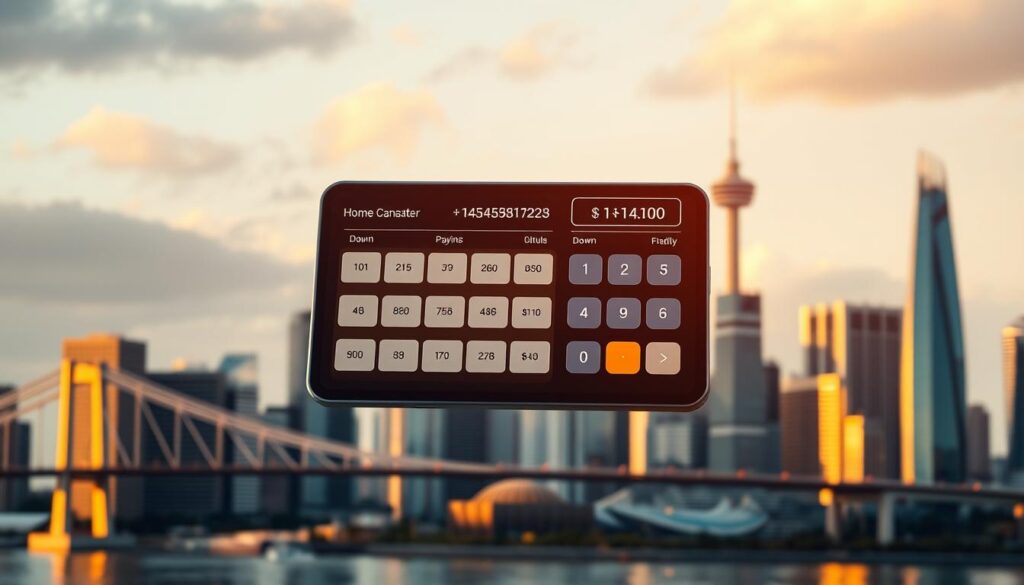
Let’s look at a concrete example. If you are buying a property valued at $450,000, the minimum initial investment is $22,500. This is 5% of the purchase price.
These calculators instantly show you the results. This makes planning much easier.
Impact on Mortgage and Monthly Payments
The size of your upfront investment has a direct and powerful effect on your finances. A larger sum means you borrow less money.
This leads to significantly lower monthly obligations. You also pay far less interest over the life of the loan.
The table below illustrates how different investment amounts affect a $450,000 property with a 25-year amortization.
| Initial Investment | Mortgage Loan Amount | Estimated Monthly Payment* | Total Interest Paid* |
|---|---|---|---|
| $22,500 (5%) | $427,500 | ~$2,100 | ~$200,000 |
| $45,000 (10%) | $405,000 | ~$1,990 | ~$190,000 |
| $90,000 (20%) | $360,000 | ~$1,770 | ~$170,000 |
*Estimates for illustration; actual rates vary.
As you can see, saving more upfront saves you money every month and over the long term. It can also help you avoid mortgage insurance under certain conditions. Understanding this relationship empowers you to make smart choices about your savings goal.
Minimum Down Payment Requirements in Canada
The amount you need to save initially isn’t a flat rate. It’s calculated using a tiered system tied directly to the home’s selling price.
Understanding these rules helps you determine which properties are within your financial reach. It also sets a clear target for your savings plan.
Requirements for Homes Priced Under $500,000
For a property costing less than $500,000, the minimum payment is straightforward. You need to contribute 5% of the purchase price.
This lower threshold makes entering the market more accessible for many first-time buyers.
Guidelines for Higher-Priced Properties
The calculation becomes tiered for more expensive homes. The rules are designed to increase the initial investment as the price rises.
- Between $500,000 and $999,999: Pay 5% on the first $500,000, plus 10% on the remaining amount.
- $1 million or more: A flat 20% minimum payment is required.
For example, a $600,000 home requires $35,000. This is 5% of $500,000 ($25,000) plus 10% of $100,000 ($10,000).
It’s vital to know that any initial sum below 20% is considered a high-ratio mortgage. This triggers a mandatory cost called mortgage default insurance.
This insurance protects the lender, not you, if you default on the loan. Saving a larger lump sum can help you avoid this additional expense.
Strategies to Save for Your Down Payment
Developing effective strategies for growing your savings can transform what seems like an impossible goal into an achievable milestone. I recommend starting with a clear plan that addresses both your spending habits and income opportunities.
Creating a Realistic Savings Plan
Begin by using online calculators to determine your exact target amount. This gives you a concrete number to work toward.
Set a practical timeline for your savings goal. If you need $30,000 in three years, you’ll need to save about $833 monthly.
Automate your savings by scheduling transfers on payday. This builds your fund consistently without requiring constant willpower.

Reducing Expenses and Increasing Income
Create a detailed budget to track all income and expenses. This helps identify areas where you can cut costs.
Reduce optional spending like dining out and subscriptions. Consider home-cooked meals and staycations instead of expensive vacations.
Explore additional income sources such as part-time work or selling unused items. These efforts can significantly accelerate your timeline.
For newcomers navigating the Canadian market, understanding mortgage options is crucial alongside these savings strategies.
Leveraging Tax-Advantaged Savings Accounts
The right savings vehicles can provide double tax advantages that multiply your money’s growth potential. I recommend exploring government programs designed specifically for first-time buyers.

Benefits of the First Home Savings Account (FHSA)
The First Home Savings Account combines the best features of other registered plans. Your contributions are tax-deductible like an RRSP.
Withdrawals for qualifying purchases remain completely tax-free. This creates savings at both ends of your transaction.
You can contribute up to $8,000 annually with a $40,000 lifetime limit. Unused room carries forward each year.
Maximizing Your RRSP and Home Buyers’ Plan (HBP)
The Home Buyers’ Plan lets you withdraw up to $60,000 from your registered retirement savings plan. This money helps with purchase costs without immediate tax consequences.
You must repay the amount over 15 years starting the second year after withdrawal. The retirement savings plan offers tax-free growth on your money.
You can combine both FHSA savings and HBP withdrawals for the same property. This strategic approach accelerates your path to ownership.
Avoiding Common Pitfalls and Mistakes
Understanding potential financial pitfalls can help you navigate the home buying process more confidently. Many buyers overlook critical details that impact their long-term financial health.
Mistakes in Assessing Your Finances
Thoroughly calculate your income, debts, and monthly expenses. This assessment determines your realistic borrowing capacity.
Your debt-to-income ratio is crucial. Lenders scrutinize this indicator when approving mortgage amounts.
Understanding Additional Costs Beyond the Down Payment
Closing costs, legal fees, and taxes add 2-3% to the total purchase price. These expenses can strain your budget if unplanned.
Renovation costs and insurance premiums also contribute to the final amount. Building a financial buffer is essential.

Mortgage default insurance varies based on your initial payment amount. This premium protects the lender, not you.
It can be paid upfront or added to your loan. Adding it to your mortgage means paying interest on the premium.
| Scenario | Initial Payment | Additional Costs | Total Required |
|---|---|---|---|
| Minimal payment | $22,500 | $9,000-$13,500 | $31,500-$36,000 |
| 10% payment | $45,000 | $9,000-$13,500 | $54,000-$58,500 |
| 20% payment | $90,000 | $9,000-$13,500 | $99,000-$103,500 |
A smaller payment frees funds for other expenses. However, it creates no equity cushion if property values decline.
Careful budgeting ensures you can manage all ongoing costs beyond just mortgage payments.
Conclusion
Your journey toward property ownership begins with this crucial financial commitment. It represents your initial equity stake and lays the foundation for long-term wealth.
Understanding minimum requirements and calculation methods is essential for any serious home buyer. This knowledge empowers you to set realistic targets.
I encourage you to combine multiple savings strategies. A disciplined plan, expense reduction, and tools like the FHSA can accelerate your timeline.
Break your goal into manageable monthly amounts. Starting early makes even substantial sums achievable over time.
Avoid common pitfalls by thoroughly assessing your finances. Account for all additional costs beyond the initial amount.
Take action now. Determine your specific target and implement a comprehensive savings plan. The reward of homeownership makes this effort worthwhile.
You are now equipped to move forward confidently with your home purchase. Your dream property is within reach.
FAQ
What is the absolute minimum I need for a home purchase in Canada?
FAQ
What is the absolute minimum I need for a home purchase in Canada?
The smallest amount you must put down depends on the property’s price. For a purchase under 0,000, the minimum is 5% of the cost. For a portion of the price between 0,000 and
FAQ
What is the absolute minimum I need for a home purchase in Canada?
The smallest amount you must put down depends on the property’s price. For a purchase under $500,000, the minimum is 5% of the cost. For a portion of the price between $500,000 and $1 million, you need 10%. For any amount over $1 million, a 20% minimum is mandatory.
How does my initial payment amount affect my mortgage?
A larger initial sum significantly impacts your loan. Putting down less than 20% means you must pay for mortgage default insurance, which is added to your loan balance. This insurance protects the lender if you default. A higher initial amount also lowers your monthly payments and the total interest you’ll pay over the life of the loan.
What is the best savings account to use for my goal?
I recommend prioritizing the First Home Savings Account (FHSA). It combines the best features of an RRSP and a TFSA: your contributions are tax-deductible, and the growth and withdrawals for a qualified home purchase are tax-free. You can also use the Home Buyers’ Plan (HBP) to withdraw from your Registered Retirement Savings Plan (RRSP), but the FHSA often provides greater flexibility and tax advantages for first-time buyers.
Besides the initial amount, what other costs should I budget for?
When buying a home, you must account for several additional expenses. These include legal fees, land transfer taxes, home inspection costs, and property insurance. It’s crucial to have a separate savings fund for these closing costs, which can typically range from 1.5% to 4% of the purchase price, to avoid financial strain.
Can I use gifted money from family for my down payment?
Yes, most lenders will accept gifted funds from immediate family members. However, you will need to provide a signed gift letter from the donor stating that the money is a true gift and not a loan that requires repayment. The lender will also want to see proof that the funds have been deposited into your account.
What is mortgage default insurance, and when is it required?
Mortgage default insurance is a policy that protects the lender if you, the borrower, fail to make your payments. It is legally required in Canada whenever your initial payment is less than 20% of the home’s purchase price. The premium for this insurance is added directly to your mortgage principal, and it does not protect you as the homeowner.
million, you need 10%. For any amount over
FAQ
What is the absolute minimum I need for a home purchase in Canada?
The smallest amount you must put down depends on the property’s price. For a purchase under $500,000, the minimum is 5% of the cost. For a portion of the price between $500,000 and $1 million, you need 10%. For any amount over $1 million, a 20% minimum is mandatory.
How does my initial payment amount affect my mortgage?
A larger initial sum significantly impacts your loan. Putting down less than 20% means you must pay for mortgage default insurance, which is added to your loan balance. This insurance protects the lender if you default. A higher initial amount also lowers your monthly payments and the total interest you’ll pay over the life of the loan.
What is the best savings account to use for my goal?
I recommend prioritizing the First Home Savings Account (FHSA). It combines the best features of an RRSP and a TFSA: your contributions are tax-deductible, and the growth and withdrawals for a qualified home purchase are tax-free. You can also use the Home Buyers’ Plan (HBP) to withdraw from your Registered Retirement Savings Plan (RRSP), but the FHSA often provides greater flexibility and tax advantages for first-time buyers.
Besides the initial amount, what other costs should I budget for?
When buying a home, you must account for several additional expenses. These include legal fees, land transfer taxes, home inspection costs, and property insurance. It’s crucial to have a separate savings fund for these closing costs, which can typically range from 1.5% to 4% of the purchase price, to avoid financial strain.
Can I use gifted money from family for my down payment?
Yes, most lenders will accept gifted funds from immediate family members. However, you will need to provide a signed gift letter from the donor stating that the money is a true gift and not a loan that requires repayment. The lender will also want to see proof that the funds have been deposited into your account.
What is mortgage default insurance, and when is it required?
Mortgage default insurance is a policy that protects the lender if you, the borrower, fail to make your payments. It is legally required in Canada whenever your initial payment is less than 20% of the home’s purchase price. The premium for this insurance is added directly to your mortgage principal, and it does not protect you as the homeowner.
million, a 20% minimum is mandatory.
How does my initial payment amount affect my mortgage?
A larger initial sum significantly impacts your loan. Putting down less than 20% means you must pay for mortgage default insurance, which is added to your loan balance. This insurance protects the lender if you default. A higher initial amount also lowers your monthly payments and the total interest you’ll pay over the life of the loan.
What is the best savings account to use for my goal?
I recommend prioritizing the First Home Savings Account (FHSA). It combines the best features of an RRSP and a TFSA: your contributions are tax-deductible, and the growth and withdrawals for a qualified home purchase are tax-free. You can also use the Home Buyers’ Plan (HBP) to withdraw from your Registered Retirement Savings Plan (RRSP), but the FHSA often provides greater flexibility and tax advantages for first-time buyers.
Besides the initial amount, what other costs should I budget for?
When buying a home, you must account for several additional expenses. These include legal fees, land transfer taxes, home inspection costs, and property insurance. It’s crucial to have a separate savings fund for these closing costs, which can typically range from 1.5% to 4% of the purchase price, to avoid financial strain.
Can I use gifted money from family for my down payment?
Yes, most lenders will accept gifted funds from immediate family members. However, you will need to provide a signed gift letter from the donor stating that the money is a true gift and not a loan that requires repayment. The lender will also want to see proof that the funds have been deposited into your account.
What is mortgage default insurance, and when is it required?
Mortgage default insurance is a policy that protects the lender if you, the borrower, fail to make your payments. It is legally required in Canada whenever your initial payment is less than 20% of the home’s purchase price. The premium for this insurance is added directly to your mortgage principal, and it does not protect you as the homeowner.
FAQ
What is the absolute minimum I need for a home purchase in Canada?
The smallest amount you must put down depends on the property’s price. For a purchase under 0,000, the minimum is 5% of the cost. For a portion of the price between 0,000 and
FAQ
What is the absolute minimum I need for a home purchase in Canada?
The smallest amount you must put down depends on the property’s price. For a purchase under $500,000, the minimum is 5% of the cost. For a portion of the price between $500,000 and $1 million, you need 10%. For any amount over $1 million, a 20% minimum is mandatory.
How does my initial payment amount affect my mortgage?
A larger initial sum significantly impacts your loan. Putting down less than 20% means you must pay for mortgage default insurance, which is added to your loan balance. This insurance protects the lender if you default. A higher initial amount also lowers your monthly payments and the total interest you’ll pay over the life of the loan.
What is the best savings account to use for my goal?
I recommend prioritizing the First Home Savings Account (FHSA). It combines the best features of an RRSP and a TFSA: your contributions are tax-deductible, and the growth and withdrawals for a qualified home purchase are tax-free. You can also use the Home Buyers’ Plan (HBP) to withdraw from your Registered Retirement Savings Plan (RRSP), but the FHSA often provides greater flexibility and tax advantages for first-time buyers.
Besides the initial amount, what other costs should I budget for?
When buying a home, you must account for several additional expenses. These include legal fees, land transfer taxes, home inspection costs, and property insurance. It’s crucial to have a separate savings fund for these closing costs, which can typically range from 1.5% to 4% of the purchase price, to avoid financial strain.
Can I use gifted money from family for my down payment?
Yes, most lenders will accept gifted funds from immediate family members. However, you will need to provide a signed gift letter from the donor stating that the money is a true gift and not a loan that requires repayment. The lender will also want to see proof that the funds have been deposited into your account.
What is mortgage default insurance, and when is it required?
Mortgage default insurance is a policy that protects the lender if you, the borrower, fail to make your payments. It is legally required in Canada whenever your initial payment is less than 20% of the home’s purchase price. The premium for this insurance is added directly to your mortgage principal, and it does not protect you as the homeowner.
million, you need 10%. For any amount over
FAQ
What is the absolute minimum I need for a home purchase in Canada?
The smallest amount you must put down depends on the property’s price. For a purchase under $500,000, the minimum is 5% of the cost. For a portion of the price between $500,000 and $1 million, you need 10%. For any amount over $1 million, a 20% minimum is mandatory.
How does my initial payment amount affect my mortgage?
A larger initial sum significantly impacts your loan. Putting down less than 20% means you must pay for mortgage default insurance, which is added to your loan balance. This insurance protects the lender if you default. A higher initial amount also lowers your monthly payments and the total interest you’ll pay over the life of the loan.
What is the best savings account to use for my goal?
I recommend prioritizing the First Home Savings Account (FHSA). It combines the best features of an RRSP and a TFSA: your contributions are tax-deductible, and the growth and withdrawals for a qualified home purchase are tax-free. You can also use the Home Buyers’ Plan (HBP) to withdraw from your Registered Retirement Savings Plan (RRSP), but the FHSA often provides greater flexibility and tax advantages for first-time buyers.
Besides the initial amount, what other costs should I budget for?
When buying a home, you must account for several additional expenses. These include legal fees, land transfer taxes, home inspection costs, and property insurance. It’s crucial to have a separate savings fund for these closing costs, which can typically range from 1.5% to 4% of the purchase price, to avoid financial strain.
Can I use gifted money from family for my down payment?
Yes, most lenders will accept gifted funds from immediate family members. However, you will need to provide a signed gift letter from the donor stating that the money is a true gift and not a loan that requires repayment. The lender will also want to see proof that the funds have been deposited into your account.
What is mortgage default insurance, and when is it required?
Mortgage default insurance is a policy that protects the lender if you, the borrower, fail to make your payments. It is legally required in Canada whenever your initial payment is less than 20% of the home’s purchase price. The premium for this insurance is added directly to your mortgage principal, and it does not protect you as the homeowner.
million, a 20% minimum is mandatory.
How does my initial payment amount affect my mortgage?
A larger initial sum significantly impacts your loan. Putting down less than 20% means you must pay for mortgage default insurance, which is added to your loan balance. This insurance protects the lender if you default. A higher initial amount also lowers your monthly payments and the total interest you’ll pay over the life of the loan.
What is the best savings account to use for my goal?
I recommend prioritizing the First Home Savings Account (FHSA). It combines the best features of an RRSP and a TFSA: your contributions are tax-deductible, and the growth and withdrawals for a qualified home purchase are tax-free. You can also use the Home Buyers’ Plan (HBP) to withdraw from your Registered Retirement Savings Plan (RRSP), but the FHSA often provides greater flexibility and tax advantages for first-time buyers.
Besides the initial amount, what other costs should I budget for?
When buying a home, you must account for several additional expenses. These include legal fees, land transfer taxes, home inspection costs, and property insurance. It’s crucial to have a separate savings fund for these closing costs, which can typically range from 1.5% to 4% of the purchase price, to avoid financial strain.
Can I use gifted money from family for my down payment?
Yes, most lenders will accept gifted funds from immediate family members. However, you will need to provide a signed gift letter from the donor stating that the money is a true gift and not a loan that requires repayment. The lender will also want to see proof that the funds have been deposited into your account.
What is mortgage default insurance, and when is it required?
Mortgage default insurance is a policy that protects the lender if you, the borrower, fail to make your payments. It is legally required in Canada whenever your initial payment is less than 20% of the home’s purchase price. The premium for this insurance is added directly to your mortgage principal, and it does not protect you as the homeowner.
FAQ
What is the absolute minimum I need for a home purchase in Canada?
The smallest amount you must put down depends on the property’s price. For a purchase under 0,000, the minimum is 5% of the cost. For a portion of the price between 0,000 and
FAQ
What is the absolute minimum I need for a home purchase in Canada?
The smallest amount you must put down depends on the property’s price. For a purchase under $500,000, the minimum is 5% of the cost. For a portion of the price between $500,000 and $1 million, you need 10%. For any amount over $1 million, a 20% minimum is mandatory.
How does my initial payment amount affect my mortgage?
A larger initial sum significantly impacts your loan. Putting down less than 20% means you must pay for mortgage default insurance, which is added to your loan balance. This insurance protects the lender if you default. A higher initial amount also lowers your monthly payments and the total interest you’ll pay over the life of the loan.
What is the best savings account to use for my goal?
I recommend prioritizing the First Home Savings Account (FHSA). It combines the best features of an RRSP and a TFSA: your contributions are tax-deductible, and the growth and withdrawals for a qualified home purchase are tax-free. You can also use the Home Buyers’ Plan (HBP) to withdraw from your Registered Retirement Savings Plan (RRSP), but the FHSA often provides greater flexibility and tax advantages for first-time buyers.
Besides the initial amount, what other costs should I budget for?
When buying a home, you must account for several additional expenses. These include legal fees, land transfer taxes, home inspection costs, and property insurance. It’s crucial to have a separate savings fund for these closing costs, which can typically range from 1.5% to 4% of the purchase price, to avoid financial strain.
Can I use gifted money from family for my down payment?
Yes, most lenders will accept gifted funds from immediate family members. However, you will need to provide a signed gift letter from the donor stating that the money is a true gift and not a loan that requires repayment. The lender will also want to see proof that the funds have been deposited into your account.
What is mortgage default insurance, and when is it required?
Mortgage default insurance is a policy that protects the lender if you, the borrower, fail to make your payments. It is legally required in Canada whenever your initial payment is less than 20% of the home’s purchase price. The premium for this insurance is added directly to your mortgage principal, and it does not protect you as the homeowner.
million, you need 10%. For any amount over
FAQ
What is the absolute minimum I need for a home purchase in Canada?
The smallest amount you must put down depends on the property’s price. For a purchase under $500,000, the minimum is 5% of the cost. For a portion of the price between $500,000 and $1 million, you need 10%. For any amount over $1 million, a 20% minimum is mandatory.
How does my initial payment amount affect my mortgage?
A larger initial sum significantly impacts your loan. Putting down less than 20% means you must pay for mortgage default insurance, which is added to your loan balance. This insurance protects the lender if you default. A higher initial amount also lowers your monthly payments and the total interest you’ll pay over the life of the loan.
What is the best savings account to use for my goal?
I recommend prioritizing the First Home Savings Account (FHSA). It combines the best features of an RRSP and a TFSA: your contributions are tax-deductible, and the growth and withdrawals for a qualified home purchase are tax-free. You can also use the Home Buyers’ Plan (HBP) to withdraw from your Registered Retirement Savings Plan (RRSP), but the FHSA often provides greater flexibility and tax advantages for first-time buyers.
Besides the initial amount, what other costs should I budget for?
When buying a home, you must account for several additional expenses. These include legal fees, land transfer taxes, home inspection costs, and property insurance. It’s crucial to have a separate savings fund for these closing costs, which can typically range from 1.5% to 4% of the purchase price, to avoid financial strain.
Can I use gifted money from family for my down payment?
Yes, most lenders will accept gifted funds from immediate family members. However, you will need to provide a signed gift letter from the donor stating that the money is a true gift and not a loan that requires repayment. The lender will also want to see proof that the funds have been deposited into your account.
What is mortgage default insurance, and when is it required?
Mortgage default insurance is a policy that protects the lender if you, the borrower, fail to make your payments. It is legally required in Canada whenever your initial payment is less than 20% of the home’s purchase price. The premium for this insurance is added directly to your mortgage principal, and it does not protect you as the homeowner.
million, a 20% minimum is mandatory.
How does my initial payment amount affect my mortgage?
A larger initial sum significantly impacts your loan. Putting down less than 20% means you must pay for mortgage default insurance, which is added to your loan balance. This insurance protects the lender if you default. A higher initial amount also lowers your monthly payments and the total interest you’ll pay over the life of the loan.
What is the best savings account to use for my goal?
I recommend prioritizing the First Home Savings Account (FHSA). It combines the best features of an RRSP and a TFSA: your contributions are tax-deductible, and the growth and withdrawals for a qualified home purchase are tax-free. You can also use the Home Buyers’ Plan (HBP) to withdraw from your Registered Retirement Savings Plan (RRSP), but the FHSA often provides greater flexibility and tax advantages for first-time buyers.
Besides the initial amount, what other costs should I budget for?
When buying a home, you must account for several additional expenses. These include legal fees, land transfer taxes, home inspection costs, and property insurance. It’s crucial to have a separate savings fund for these closing costs, which can typically range from 1.5% to 4% of the purchase price, to avoid financial strain.
Can I use gifted money from family for my down payment?
Yes, most lenders will accept gifted funds from immediate family members. However, you will need to provide a signed gift letter from the donor stating that the money is a true gift and not a loan that requires repayment. The lender will also want to see proof that the funds have been deposited into your account.
What is mortgage default insurance, and when is it required?
Mortgage default insurance is a policy that protects the lender if you, the borrower, fail to make your payments. It is legally required in Canada whenever your initial payment is less than 20% of the home’s purchase price. The premium for this insurance is added directly to your mortgage principal, and it does not protect you as the homeowner.
FAQ
What is the absolute minimum I need for a home purchase in Canada?
The smallest amount you must put down depends on the property’s price. For a purchase under 0,000, the minimum is 5% of the cost. For a portion of the price between 0,000 and
FAQ
What is the absolute minimum I need for a home purchase in Canada?
The smallest amount you must put down depends on the property’s price. For a purchase under $500,000, the minimum is 5% of the cost. For a portion of the price between $500,000 and $1 million, you need 10%. For any amount over $1 million, a 20% minimum is mandatory.
How does my initial payment amount affect my mortgage?
A larger initial sum significantly impacts your loan. Putting down less than 20% means you must pay for mortgage default insurance, which is added to your loan balance. This insurance protects the lender if you default. A higher initial amount also lowers your monthly payments and the total interest you’ll pay over the life of the loan.
What is the best savings account to use for my goal?
I recommend prioritizing the First Home Savings Account (FHSA). It combines the best features of an RRSP and a TFSA: your contributions are tax-deductible, and the growth and withdrawals for a qualified home purchase are tax-free. You can also use the Home Buyers’ Plan (HBP) to withdraw from your Registered Retirement Savings Plan (RRSP), but the FHSA often provides greater flexibility and tax advantages for first-time buyers.
Besides the initial amount, what other costs should I budget for?
When buying a home, you must account for several additional expenses. These include legal fees, land transfer taxes, home inspection costs, and property insurance. It’s crucial to have a separate savings fund for these closing costs, which can typically range from 1.5% to 4% of the purchase price, to avoid financial strain.
Can I use gifted money from family for my down payment?
Yes, most lenders will accept gifted funds from immediate family members. However, you will need to provide a signed gift letter from the donor stating that the money is a true gift and not a loan that requires repayment. The lender will also want to see proof that the funds have been deposited into your account.
What is mortgage default insurance, and when is it required?
Mortgage default insurance is a policy that protects the lender if you, the borrower, fail to make your payments. It is legally required in Canada whenever your initial payment is less than 20% of the home’s purchase price. The premium for this insurance is added directly to your mortgage principal, and it does not protect you as the homeowner.
million, you need 10%. For any amount over
FAQ
What is the absolute minimum I need for a home purchase in Canada?
The smallest amount you must put down depends on the property’s price. For a purchase under $500,000, the minimum is 5% of the cost. For a portion of the price between $500,000 and $1 million, you need 10%. For any amount over $1 million, a 20% minimum is mandatory.
How does my initial payment amount affect my mortgage?
A larger initial sum significantly impacts your loan. Putting down less than 20% means you must pay for mortgage default insurance, which is added to your loan balance. This insurance protects the lender if you default. A higher initial amount also lowers your monthly payments and the total interest you’ll pay over the life of the loan.
What is the best savings account to use for my goal?
I recommend prioritizing the First Home Savings Account (FHSA). It combines the best features of an RRSP and a TFSA: your contributions are tax-deductible, and the growth and withdrawals for a qualified home purchase are tax-free. You can also use the Home Buyers’ Plan (HBP) to withdraw from your Registered Retirement Savings Plan (RRSP), but the FHSA often provides greater flexibility and tax advantages for first-time buyers.
Besides the initial amount, what other costs should I budget for?
When buying a home, you must account for several additional expenses. These include legal fees, land transfer taxes, home inspection costs, and property insurance. It’s crucial to have a separate savings fund for these closing costs, which can typically range from 1.5% to 4% of the purchase price, to avoid financial strain.
Can I use gifted money from family for my down payment?
Yes, most lenders will accept gifted funds from immediate family members. However, you will need to provide a signed gift letter from the donor stating that the money is a true gift and not a loan that requires repayment. The lender will also want to see proof that the funds have been deposited into your account.
What is mortgage default insurance, and when is it required?
Mortgage default insurance is a policy that protects the lender if you, the borrower, fail to make your payments. It is legally required in Canada whenever your initial payment is less than 20% of the home’s purchase price. The premium for this insurance is added directly to your mortgage principal, and it does not protect you as the homeowner.
million, a 20% minimum is mandatory.
How does my initial payment amount affect my mortgage?
A larger initial sum significantly impacts your loan. Putting down less than 20% means you must pay for mortgage default insurance, which is added to your loan balance. This insurance protects the lender if you default. A higher initial amount also lowers your monthly payments and the total interest you’ll pay over the life of the loan.
What is the best savings account to use for my goal?
I recommend prioritizing the First Home Savings Account (FHSA). It combines the best features of an RRSP and a TFSA: your contributions are tax-deductible, and the growth and withdrawals for a qualified home purchase are tax-free. You can also use the Home Buyers’ Plan (HBP) to withdraw from your Registered Retirement Savings Plan (RRSP), but the FHSA often provides greater flexibility and tax advantages for first-time buyers.
Besides the initial amount, what other costs should I budget for?
When buying a home, you must account for several additional expenses. These include legal fees, land transfer taxes, home inspection costs, and property insurance. It’s crucial to have a separate savings fund for these closing costs, which can typically range from 1.5% to 4% of the purchase price, to avoid financial strain.
Can I use gifted money from family for my down payment?
Yes, most lenders will accept gifted funds from immediate family members. However, you will need to provide a signed gift letter from the donor stating that the money is a true gift and not a loan that requires repayment. The lender will also want to see proof that the funds have been deposited into your account.
What is mortgage default insurance, and when is it required?
Mortgage default insurance is a policy that protects the lender if you, the borrower, fail to make your payments. It is legally required in Canada whenever your initial payment is less than 20% of the home’s purchase price. The premium for this insurance is added directly to your mortgage principal, and it does not protect you as the homeowner.