
Did you know that nearly every economic pathway to becoming a permanent resident requires proof of your English skills? The process is built on objective, standardized assessments. This guide will help you understand the critical role of language proficiency in your application.
Immigration, Refugees and Citizenship Canada (IRCC) designates specific evaluations as trusted tools. For most applicants, this means taking the General Training option of a globally recognized test. It is a crucial step that many people initially overlook.
This comprehensive resource outlines the current requirements for 2025. I will provide detailed score benchmarks and effective preparation strategies. My goal is to help you maximize your performance and strengthen your application profile.
Remember, even native speakers must provide these official results. The system operates on verified scores, not assumptions. Your results directly impact your eligibility and competitive ranking.
Key Takeaways
- Language testing is a mandatory step for most economic immigration pathways.
- You must take the General Training version, not the Academic version.
- Official results are required from all applicants, including native speakers.
- Your scores are a key factor in your eligibility and ranking.
- This guide is updated with the latest 2025 policies from IRCC.
Understanding Canada’s Immigration Landscape
Skilled workers seeking permanent residency navigate through a structured system that prioritizes language capabilities and professional experience. The primary mechanism is the Express Entry platform, launched in 2015. This online application management tool revolutionized how economic migrants are selected.
The point-based approach evaluates candidates across multiple criteria. Three main federal programs operate under this framework. Each has distinct eligibility requirements but shares a common emphasis on communication skills.
| Program | Primary Focus | Minimum Language Requirement | Processing Time |
|---|---|---|---|
| Federal Skilled Worker | Education & Experience | CLB 7 | 6-12 months |
| Federal Skilled Trades | Technical Skills | CLB 5 | 6-12 months |
| Canadian Experience Class | Local Work Experience | CLB 7 | 6-12 months |
English language proficiency carries significant weight in the Comprehensive Ranking System. Higher scores dramatically improve chances of receiving an Invitation to Apply. Beyond federal pathways, Provincial Nominee Programs also mandate testing. The Atlantic Immigration Program represents one such regional alternative.
Understanding this landscape helps candidates strategize their application approach effectively. The right preparation can make a substantial difference in outcome.
Overview of IELTS for Canada immigration
The General Training exam stands apart from its Academic counterpart, serving a distinct purpose for applicants. It focuses on practical, everyday language skills needed for social and workplace contexts.
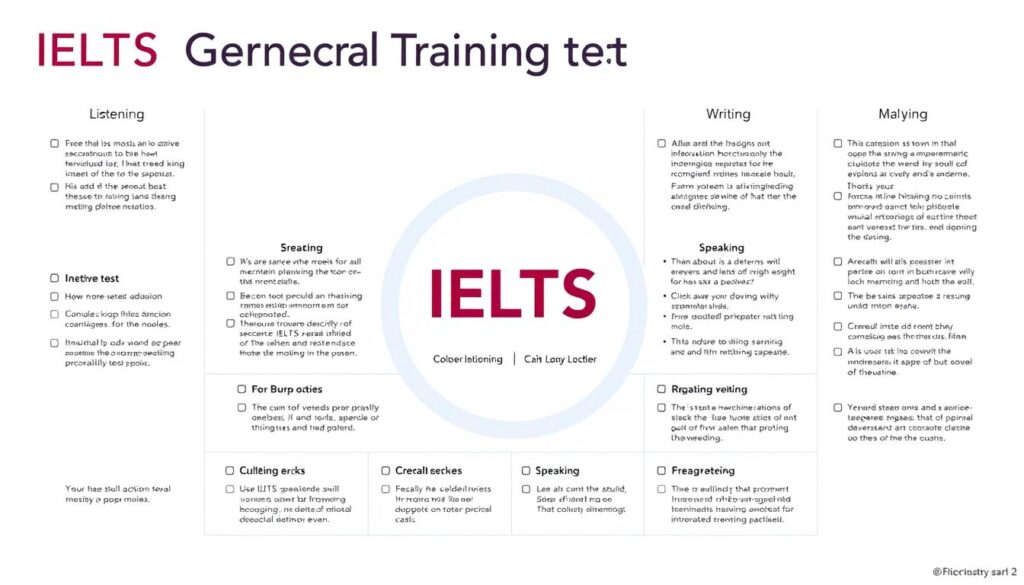
This evaluation measures four core abilities. Each section receives a band score from 0 to 9. The entire test takes about 2 hours and 45 minutes to complete.
| Test Section | Skills Assessed | Score Range |
|---|---|---|
| Listening | Understanding spoken English | Band 0 – 9 |
| Reading | Comprehending written texts | Band 0 – 9 |
| Writing | Producing written responses | Band 0 – 9 |
| Speaking | Verbal communication | Band 0 – 9 |
You can take this language proficiency test at thousands of locations worldwide. Official results are typically available within days.
It is crucial to know that your scores are valid for two years from the test date. The IRCC does not accept single-skill retakes. You must complete the full assessment again if you wish to improve your results. Ensure you understand the specific requirements for your application.
Approved Language Tests and Their Validity Periods
The immigration authorities recognize multiple testing options beyond the most commonly discussed evaluation. You have several choices when demonstrating your language skills.
For English assessments, the Canadian English Language Proficiency Index Program (CELPIP) offers a computer-delivered option primarily available within the country. The Pearson Test of English Core represents a newer digital alternative with global availability.
French proficiency requires specific evaluations. The Test d’évaluation de français and Test de connaissance du français serve as the only approved options for demonstrating French language capabilities.
All test results maintain a strict two-year validity window. This timeframe applies when submitting your profile and final application. I recommend strategic planning to ensure your scores remain current throughout the entire process.
The authorities do not accept single-skill retakes for certain evaluations. Candidates seeking improvement must complete the full assessment again. Taking tests in both official languages can maximize your comprehensive ranking points.
IELTS Score Benchmarks for Federal Skilled Worker
Meeting the language threshold is your first critical step toward eligibility for the Federal Skilled Worker Program. You must achieve a minimum score of 6.0 in each ability: Speaking, Listening, Reading, and Writing. This corresponds to CLB level 7.
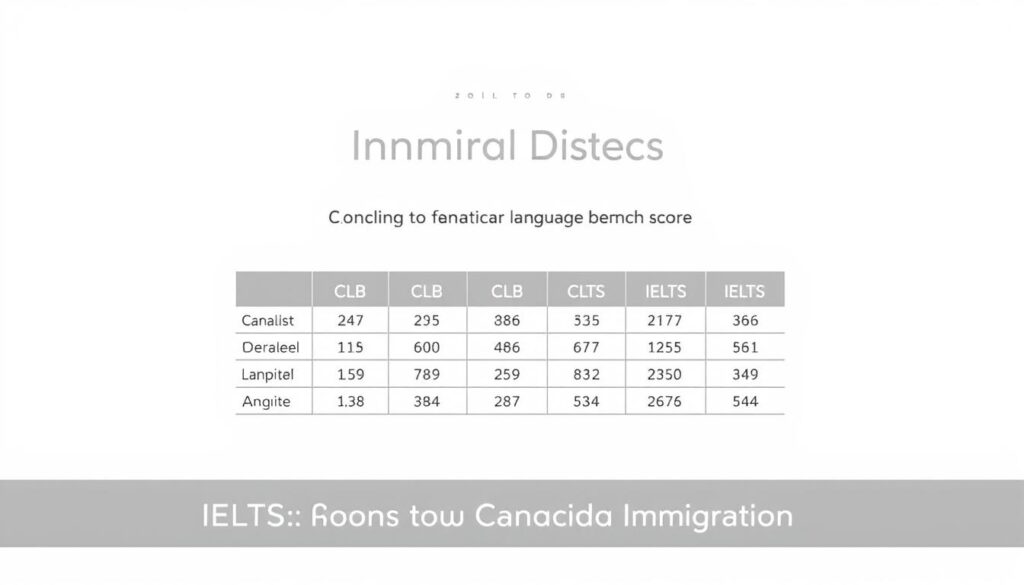
Your test results directly translate into points on the program’s assessment grid. For your first official language, you can earn a maximum of 24 points. Higher scores yield more points per ability.
| CLB Level | Speaking | Listening | Reading | Writing | Points per Ability |
|---|---|---|---|---|---|
| 7 | 6.0 | 6.0 | 6.0 | 6.0 | 4 |
| 8 | 6.5 | 7.5 | 6.5 | 6.5 | 5 |
| 9 | 7.0 | 8.0 | 7.0 | 7.0 | 6 |
Achieving CLB 9 grants the maximum 24 points. This significantly strengthens your application profile. Language ability can contribute up to 28 points when including a second official language.
Candidates must score at least 67 points overall to enter the Express Entry pool. Strong test results are therefore essential for initial eligibility. Aiming beyond the minimum level is a powerful strategy for any skilled worker.
IELTS Score Benchmarks for Federal Skilled Trades
The Federal Skilled Trades Program acknowledges the practical communication demands of technical occupations. This stream features adjusted language requirements compared to professional pathways.
Minimum entry scores for the federal skilled trades stream are Speaking 5.0, Listening 5.0, Reading 3.5, and Writing 4.0. These correspond to CLB 5 for Speaking/Listening and CLB 4 for Reading/Writing.
| CLB Level | Speaking | Listening | Reading | Writing |
|---|---|---|---|---|
| 4 | 4.0 | 4.5 | 3.5 | 4.0 |
| 5 | 5.0 | 5.0 | 4.0 | 5.0 |
| 6 | 5.5 | 5.5 | 5.0 | 5.5 |
| 7 | 6.0 | 6.0 | 6.0 | 6.0 |
| 8 | 6.5 | 7.5 | 6.5 | 6.5 |
| 9 | 7.0 | 8.0 | 7.0 | 7.0 |
While the minimum clb level is lower, achieving higher scores significantly boosts your Comprehensive Ranking System points. All candidates compete in the same Express Entry pool regardless of program.
I recommend aiming for CLB 7 or higher to improve invitation chances. The official language testing requirements provide complete details for skilled trades applicants.
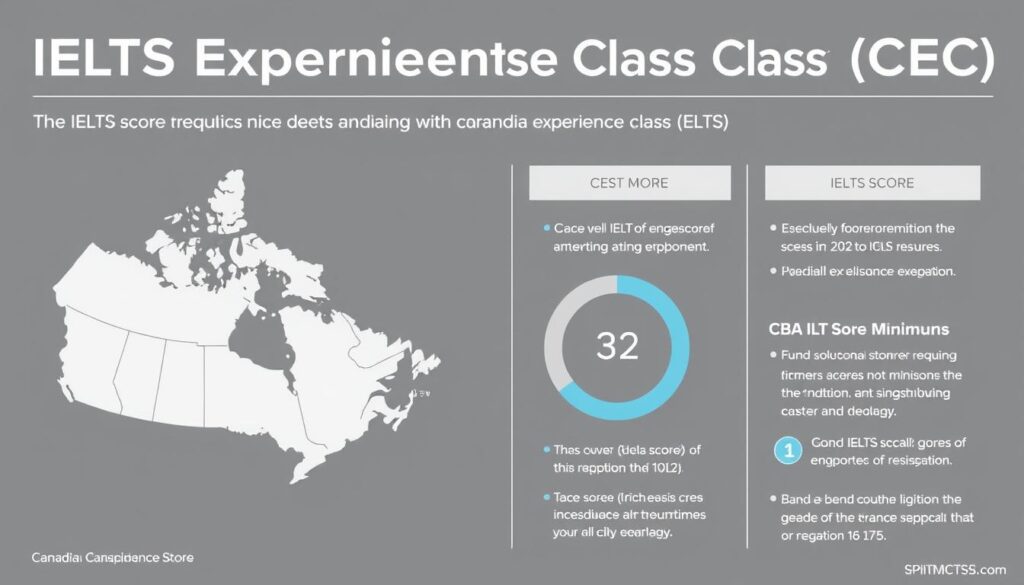
IELTS Requirements for the Canadian Experience Class
The Canadian Experience Class pathway recognizes the value of work experience gained within the country. Your occupation’s NOC TEER category determines the specific language requirements you must meet.
Managerial and professional positions (TEER 0 and 1) require minimum CLB level 7. Technical jobs and skilled trades (TEER 2 and 3) have a lower threshold at CLB level 5.
| CLB Level | Speaking | Listening | Reading | Writing |
|---|---|---|---|---|
| 5 | 5.0 | 5.0 | 4.0 | 5.0 |
| 6 | 5.5 | 5.5 | 5.0 | 5.5 |
| 7 | 6.0 | 6.0 | 6.0 | 6.0 |
| 8 | 6.5 | 7.5 | 6.5 | 6.5 |
| 9 | 7.0 | 8.0 | 7.0 | 7.0 |
Language Instruction for Newcomers to Canada centers are not approved testing agencies for this program. You must use official test centers for your assessment.
Many candidates already working in the country possess practical English skills. However, specific preparation for the test format helps achieve optimal scores that reflect true ability.
Aiming beyond minimum requirements significantly strengthens your application profile. Higher scores increase your Comprehensive Ranking System points dramatically.
Breaking Down the IELTS Sections and CLB Equivalencies
Each section of the language proficiency test evaluates specific communication skills relevant to daily life and work contexts. Understanding this structure helps you prepare effectively.
Understanding IELTS Subsections
The assessment measures four core abilities through distinct tasks. The listening section presents recordings of conversations and monologues. Test takers must demonstrate comprehension of various English accents.
The reading component uses practical texts like advertisements and manuals. These materials reflect everyday communication needs in professional settings.
Writing tasks require producing a formal letter and an essay. The speaking section involves a face-to-face conversation with an examiner. Each ability receives an individual band score from 0 to 9.
Converting IELTS Scores to CLB Levels
The Canadian Language Benchmarks system translates your test results into standardized levels. This conversion follows specific patterns for each skill.
Listening typically requires higher scores to achieve the same CLB level as other abilities. For example, CLB 9 demands IELTS 7.0 for speaking but 8.0 for listening. The complete conversion chart shows all equivalencies.
CLB 7 represents the minimum threshold for most programs. Achieving CLB 9 significantly boosts your Comprehensive Ranking System points. Your individual section scores determine your eligibility, not the overall band score.
Effective Strategies for IELTS General Training Preparation
Proper preparation strategy separates successful candidates from those who struggle with their language assessment. I will guide you through essential techniques that maximize your performance.
This version differs significantly from the Academic format in Reading and Writing sections. Understanding these distinctions is crucial for effective study.
Exam Format and Time Management
The entire evaluation takes approximately 2 hours and 45 minutes to complete. Each section has specific timing requirements that demand careful planning.
Listening allows 30 minutes plus 10 minutes for answer transfer. Reading provides 60 minutes with no additional time. Writing requires 60 minutes divided between two tasks.

Speaking lasts 11-14 minutes conducted face-to-face. Time management is particularly critical for the Reading section where you must answer 40 questions efficiently.
Practice Resources and Study Techniques
Official sources offer more free practice materials than any competing assessment. Utilize sample tests and preparation books from authorized providers.
Create a structured study plan focusing on weaker areas. Take 3-4 full practice tests under timed conditions before your actual evaluation.
For Speaking preparation, record responses to common topics like work and technology. This helps identify areas needing improvement.
Consider professional tutoring if self-study proves challenging. Many candidates benefit from expert guidance to achieve their target scores.
Insider Tips for Maximizing Your IELTS Results
Beyond preparation, how you navigate the actual evaluation day impacts your final numbers substantially. I will share practical strategies that can boost your performance during each section.
During the listening component, immediately notify staff if audio quality affects your comprehension. Use the 10-minute transfer time wisely to check spelling accuracy.
The reading section requires direct answer sheet recording since no extra time follows. Manage your time effectively by spending about 90 seconds per question.
For the writing tasks, strictly meet word count requirements and plan responses beforehand. Leave 3-5 minutes for proofreading to catch errors.
The speaking evaluation benefits from natural eye contact and extended responses. Speak clearly at a moderate pace while demonstrating vocabulary range.
Your test results typically arrive within 13 days. If dissatisfied, you can request re-evaluation within six weeks. There is no waiting period to retake the assessment.
Aiming for higher scores like CLB 9 significantly increases your Comprehensive Ranking System points. Strategic retesting focused on weaker areas often yields dramatic improvements.
Navigating Express Entry and CRS Score Enhancement
Your language test results directly influence your standing in the competitive Express Entry pool. The Comprehensive Ranking System assigns points based on multiple factors, with English language proficiency carrying significant weight.
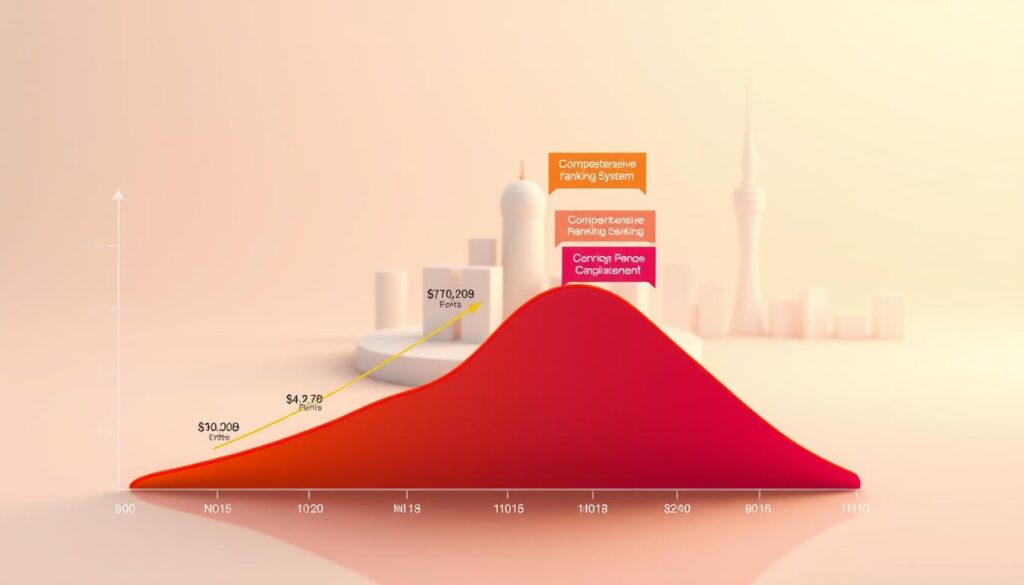
Achieving CLB 9 creates a dramatic advantage. This advanced level unlocks bonus points through skills transferability combinations. Your education and foreign work experience pair with strong language skills for maximum gains.
Consider this example showing how improved results affect your total score:
| Language Level | Base Points | Skills Transferability | Total CRS Points |
|---|---|---|---|
| CLB 8 | 24 | 25 | 382 |
| CLB 9 | 32 | 50 | 464 |
This 82-point increase can move your application from waiting to invitation-ready. Accompanying spouses can contribute up to 20 additional points through their own language skills.
I recommend using the official CRS calculator to model different score scenarios. Focused preparation for higher proficiency levels represents your most efficient path to success.
Achieving Success in Your Canada Immigration Journey
Success in the immigration process requires viewing it as a strategic journey rather than a single event. I recommend creating a realistic timeline that accounts for all phases.
Language assessment preparation typically takes 2-6 months. The Express Entry pool waiting period varies based on your Comprehensive Ranking System score. Application processing adds another 6-12 months to the total timeline.
Take your first language evaluation early to establish baseline results. This allows for targeted improvement if needed. Your test results must remain valid throughout the entire process.
Submitting an Expression of Interest places you in a competitive pool. Only candidates with the highest scores receive Invitations to Apply. The number of ITAs issued depends on annual immigration levels.
Monitor Express Entry draw results regularly to gauge your competitiveness. Consider Provincial Nominee Programs as backup strategies with different requirements.
Explore all approved language assessments to find the format that suits your strengths. Some candidates perform better with computer-based tests while others prefer traditional formats.
Conclusion
The effort dedicated to language preparation yields returns that extend far beyond the initial immigration process. This evaluation serves as a mandatory gateway for most economic pathways, with CLB 7 representing the minimum threshold and CLB 9 offering significant competitive advantages.
Viewing your preparation as a strategic investment can dramatically improve your application’s standing. Higher scores translate directly into enhanced ranking points and faster processing times.
The system rewards comprehensive preparation because strong English language skills predict successful integration. While the requirements may seem challenging, they are absolutely achievable with dedicated effort.
Mastering this assessment represents one of the most direct pathways to improving your prospects. The benefits extend well beyond eligibility, contributing to long-term success in your new community.