


Did you know the system that ranks candidates for Canadian permanent residency uses a massive 1,200-point scale? That single number determines who receives an invitation to apply. Understanding where you stand on that scale is the most critical first step in your journey.
I want to introduce you to a powerful tool for 2025: the Express Entry CRS calculator. This free online resource provides an instant estimate of your Comprehensive Ranking System score. It evaluates core factors like your age, education, work history, and language skills.
Getting your estimated score is essential before you submit an Express Entry profile. It helps you make informed decisions about your immigration pathway. While the number is vital, it’s just one part of the picture. A complete understanding of the requirements is crucial for success.
This guide will walk you through using the tool effectively. We will also explore what your score means for your application prospects. Let’s begin.
Key Takeaways
- The Comprehensive Ranking System uses a 1,200-point scale to evaluate candidates.
- An online calculator provides an instant estimate of your eligibility score.
- Understanding your score is the essential first step before creating an Express Entry profile.
- The tool assesses factors like age, education, work experience, and language proficiency.
- Your score is a key indicator, but understanding the full application process is vital.
- This guide will help you interpret your results and plan your next steps effectively.
Understanding the Canada PR Process
Navigating the pathway to residency requires familiarity with the primary selection mechanism used by immigration authorities. This system manages applications for skilled professionals seeking to build their future in the country.
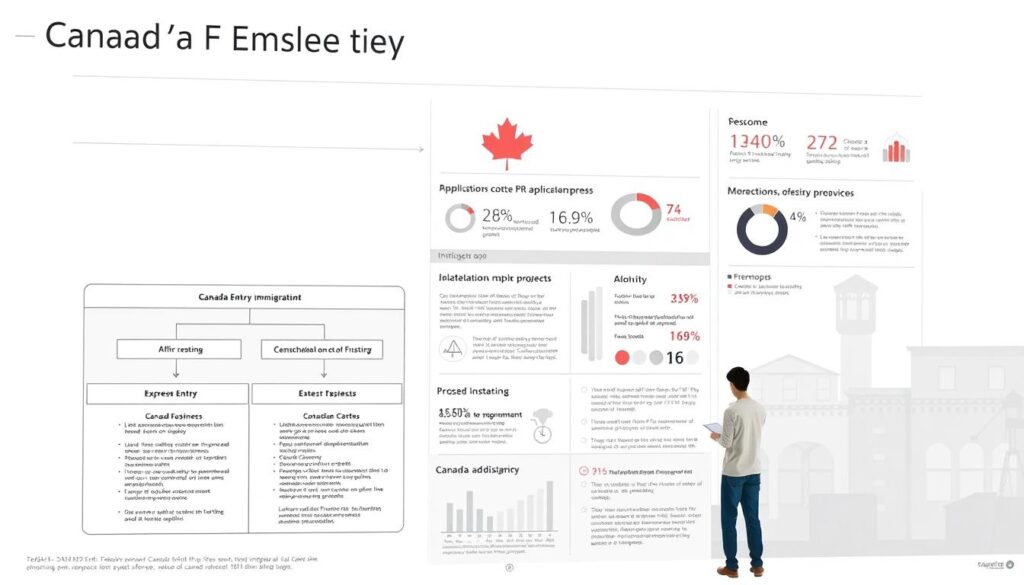
Overview of the Canadian Immigration Pathway
Immigration, Refugees and Citizenship Canada (IRCC) operates the Express Entry system to select candidates for permanent residence. This digital platform processes three main federal economic programs.
The Federal Skilled Worker program targets professionals with specific education and experience. The Federal Skilled Trades program focuses on qualified tradespersons. The Canadian Experience Class serves individuals with previous work experience in the country.
| Program | Primary Focus | Key Requirements |
|---|---|---|
| Federal Skilled Worker | Educated Professionals | Work experience, language proficiency, education |
| Federal Skilled Trades | Skilled Tradespeople | Trade certification, work experience, job offer |
| Canadian Experience Class | Previous Canadian Workers | Canadian work experience, language skills |
Role of Express Entry and CRS in PR Applications
Candidates must qualify for one program to enter the Express Entry pool. Each receives a score through the Comprehensive Ranking System. This numerical value determines ranking position.
The CRS evaluates core human capital factors like age and education. It also considers spouse contributions and skill transferability. Additional points come from provincial nominations or job offers.
Regular draws invite candidates above specific score thresholds. Understanding your CRS score is essential for planning your application strategy effectively.
How to Use the Canada PR Points Calculator to Assess Your Eligibility
Effective use of the ranking estimator can significantly improve your immigration planning strategy. This tool provides immediate feedback on your potential standing within the selection system.
Calculator Features and Benefits
The assessment instrument offers instant scoring based on your personal details. You can explore different scenarios to understand how changes affect your results.
Having official language test results and educational credential assessments ready ensures maximum accuracy. Even without these documents, you can obtain a preliminary estimate.
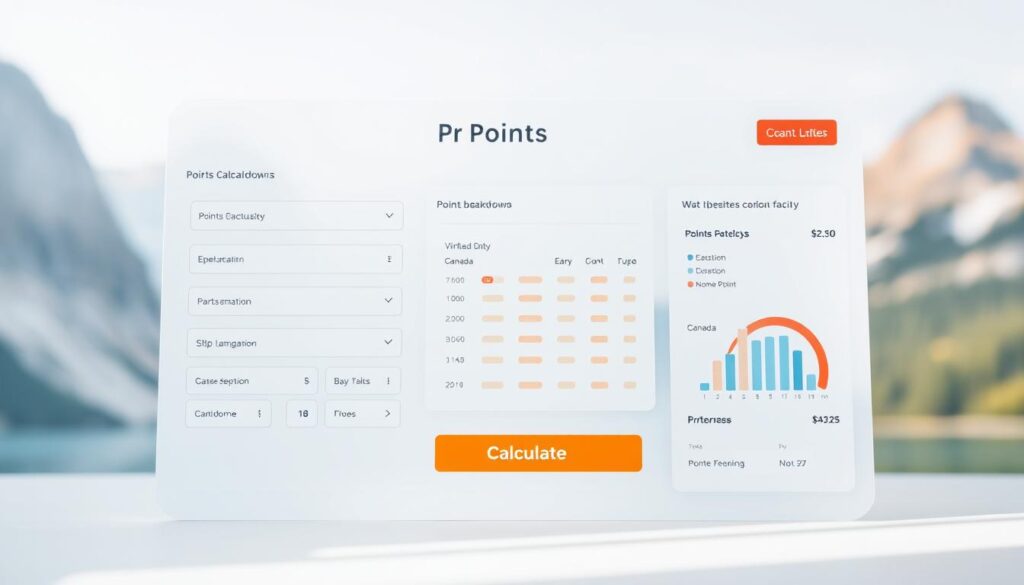
Step-by-Step Instructions for Using the Tool
Begin by accessing the online resource through official immigration websites. Enter your age, education level, work history, and language proficiency details accurately.
Review the estimated score carefully. This number indicates your current eligibility for Express Entry consideration.
The Canada Job Classifier tool complements this process. It helps determine if your occupation qualifies under the National Occupational Classification system.
| Assessment Factor | Data Required | Point Impact |
|---|---|---|
| Language Proficiency | Test results (IELTS/CELPIP) | High |
| Education Level | ECA for foreign degrees | Significant |
| Work Experience | Detailed employment history | Moderate to High |
| Age | Current age | Variable |
Remember that the calculator provides an estimate only. Your final Comprehensive Ranking System score is confirmed when you submit your official profile.
Key Eligibility Criteria for Canadian Permanent Residency
Before diving into the scoring system, it’s essential to grasp the core eligibility factors that form the foundation of your application. The Federal Skilled Worker Program uses a grid of six selection factors. You must score at least 67 out of 100 points to qualify.
Age, Education, and Work Experience Factors
Your age significantly impacts your score. Candidates between 18 and 35 years receive the maximum 12 points. The number of points decreases after age 35.
Education is another critical area. A PhD can earn you 25 points, while a Master’s degree typically earns 23. You must get an Educational Credential Assessment for foreign degrees.
Your skilled work experience also counts. You need at least one year of relevant experience within the last decade. More years of experience can earn you up to 15 points.
Language Proficiency and Adaptability Considerations
Strong language skills are vital. You can earn a maximum of 28 points for proficiency in English or French. Tests like IELTS or CELPIP assess your abilities.
Adaptability factors can add up to 10 valuable points. This includes previous work or study in the country, or a spouse’s language skills. Having a relative who is a citizen can also help.
Job Offer and Proof of Funds Requirements
A valid job offer from an eligible employer can provide up to 10 points. This arranged employment must be in a skilled occupation. It may also exempt you from showing proof of funds.
If you do not have a job offer, you must demonstrate sufficient financial resources. This proof of funds shows you can support yourself and your family after arrival.
Understanding the Comprehensive Ranking System (CRS)
Your total eligibility score comprises several distinct sections, each contributing differently based on your personal circumstances. The comprehensive ranking system uses a 1,200-point scale to evaluate candidates.
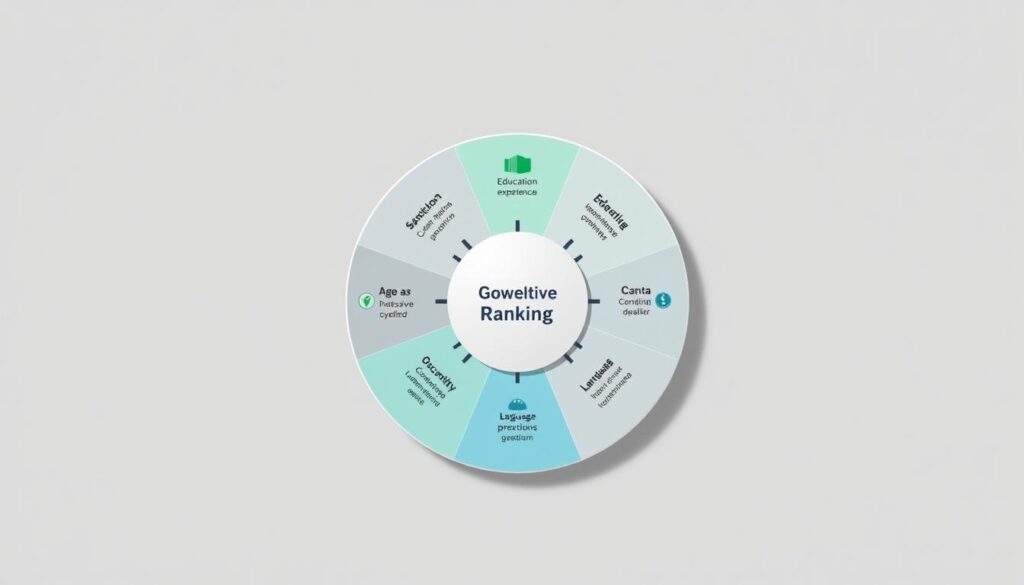
This framework determines your position in the selection pool. Understanding how points are allocated helps you identify areas for improvement.
Breakdown of Core Human Capital Factors
Core human capital factors include age, education, language proficiency, and Canadian work experience. Single applicants can earn up to 500 points in this section.
Those applying with a spouse or common-law partner have different maximums. The principal applicant can score up to 460 points, with additional points available for their partner’s qualifications.
- Age: Maximum 110 points (single) or 100 points (with partner) for candidates aged 20-29
- Education: PhD earns 150 points for principal applicant
- Language proficiency: CLB 9 or higher significantly boosts scores
- Canadian work experience: Up to 80 points for single applicants
Details of Skill Transferability and Additional Points
Skill transferability can add up to 100 points to your total. This section rewards combinations of strong qualifications.
Education paired with language ability or local work experience earns points. Foreign work experience combined with these factors also contributes.
Additional opportunities include:
- Provincial nomination: 600 points
- French language skills with English: Up to 50 points
- Canadian study experience: Up to 30 points
- Sibling in the country: 15 points
These elements can substantially increase your final score in the ranking system.
Enhancing Your Profile for a Higher CRS Score
Strategic profile enhancement can dramatically improve your standing in the selection pool. Many candidates discover substantial opportunities to increase their ranking through targeted improvements.
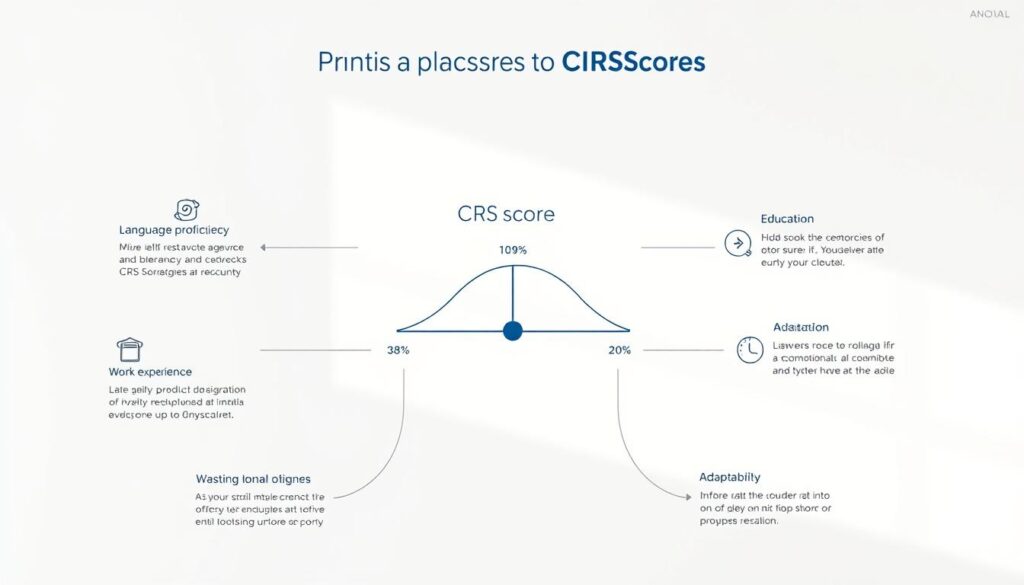
I recommend using the comprehensive ranking estimator to identify your strongest areas for development. This approach helps prioritize your efforts effectively.
Strategies to Boost Language Proficiency and Education Points
Improving your language ability offers one of the most significant scoring opportunities. Achieving CLB 9 or higher across all four test components can substantially increase your results.
Consider taking both English and French language assessments. Strong French language skills combined with English proficiency can add up to 50 additional points to your total.
Educational enhancement also provides valuable gains. Pursue additional credentials or ensure all post-secondary qualifications receive proper assessment documentation.
Optimizing Work Experience and Spouse/Common-Law Partner Contributions
Gaining local work experience significantly impacts your profile. Even part-time employment counts toward requirements when sufficient hours accumulate over time.
Your spouse or common-law partner can contribute up to 40 points through their own qualifications. Their education, language test results, and work history all factor into this calculation.
Carefully evaluate whether including a partner maximizes your overall score. The distribution between core factors differs for single applicants versus couples.
Navigating Express Entry and Provincial Nominee Programs
Many candidates overlook the strategic importance of provincial nomination programs. Understanding both federal and regional pathways can significantly improve your chances of receiving an invitation to apply.

Insights into Express Entry Draws and CRS Thresholds
Immigration authorities conduct regular selection rounds, typically every two weeks. During each draw, candidates meeting the minimum points score receive an invitation apply for permanent residence.
The cutoff threshold varies based on pool size and immigration targets. You should aim for the maximum points possible to increase your chances. Historical data shows that having at least one strong factor can make a significant difference.
Benefits and Requirements of Provincial Nominee Programs
Provincial nominations offer a powerful alternative pathway. Receiving a nomination adds 600 points to your comprehensive ranking system score. This virtually guarantees an invitation in the next Express Entry draw.
Each province has unique criteria targeting specific skills and experience. Some require previous connections to the region, while others focus on occupational needs. Research which programs align with your profile for the best results.
Successful candidates must demonstrate genuine intent to reside in the nominating province. This commitment is essential throughout the application process.
Useful Online Tools and Resources for Eligibility Assessment
Accessing reliable online resources can transform your immigration assessment process. I recommend starting with comprehensive digital tools that provide immediate feedback on your standing.
Exploring the CanadaVisa CRS Calculator Tool and Job Classifier
The CanadaVisa CRS calculator offers a detailed estimate of your comprehensive ranking system score. This free tool evaluates all relevant factors based on your personal information.
I find the accompanying Job Classifier particularly valuable. It helps determine if your occupation qualifies under the National Occupational Classification system. This is essential for Federal Skilled Worker Program eligibility.
These resources come from Cohen Immigration Law, which operates CanadaVisa.com. The firm brings over 45 years of experience with more than 60 immigration professionals.
Additional Web Sources and Immigration Guidance
While online tools provide excellent preliminary assessments, they offer estimates rather than official determinations. Always consult qualified legal professionals for personalized advice.
Gather your language test results, educational assessments, and detailed work history before using these tools. Accurate documentation ensures the most reliable outcomes.
Additional reputable sources include official government websites and established immigration law firms. These provide current program requirements and procedural guidance.
Conclusion
Embarking on the journey toward permanent residency demands a clear strategic roadmap, beginning with accurate self-assessment. Understanding your position within the Comprehensive Ranking System is the essential first step for anyone considering this immigration pathway.
While meeting minimum requirements is necessary, competitive candidates should aim for significantly higher scores. Multiple factors contribute to your total, including age, education, language proficiency, and work experience. Optimizing each component dramatically increases your chances of success.
You have numerous strategies available to improve your standing. Consider retaking language tests or gaining additional local work experience. According to the official 2022 Express Entry report, many candidates miss opportunities for additional points that could boost their profiles.
Use assessment tools as planning instruments to identify strengths and weaknesses. With proper preparation and strategic enhancement, you can successfully navigate the path to achieving your immigration goals.