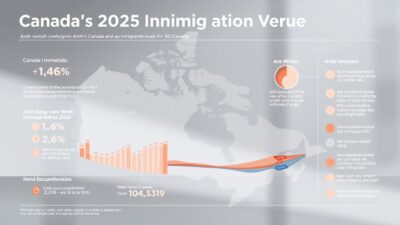


In the first half of 2025 alone, provincial immigration streams across Canada issued over 45,000 invitations to skilled workers seeking permanent residency. This staggering figure highlights a powerful shift in how newcomers build their lives here.
I have prepared a comprehensive analysis of these nomination outcomes. This article focuses specifically on identifying which regions are most actively welcoming individuals from Arab nations.
My goal is to provide a detailed resource for prospective immigrants. If you are from an Arab country and exploring pathways to Canada, understanding this decentralized system is crucial. Provinces and territories now have significant autonomy to select candidates who meet their unique economic and demographic needs.
This analysis is built on official data. It offers evidence-based insights into invitation trends, eligibility criteria, and sector-specific opportunities. Knowing the patterns and score requirements can help you strategically position your application for success.
Key Takeaways
- The Provincial Nominee Program is a major pathway for skilled workers to gain Canadian permanent residency.
- Different provinces have unique immigration streams tailored to their local labor market needs.
- Understanding which provinces are actively inviting Arab immigrants is key to a successful application strategy.
- Official draw data from 2025 reveals clear trends in targeted occupations and required scores.
- Strategic preparation based on provincial criteria can significantly improve your chances of receiving an invitation.
Introduction: Overview of the PNP Draw Landscape
The landscape of provincial immigration selection has evolved significantly, with territories actively seeking candidates who align with their specific economic requirements. This decentralized approach allows regions to address their unique demographic challenges while supporting local industries.
Purpose of this Analysis
My objective is to provide Arab immigrants with clear, actionable information about which Canadian provinces are most actively conducting selection rounds. Understanding these patterns helps identify the most promising pathway for your immigration journey.
I examine how provincial nomination initiatives have gained increased autonomy in 2025. Regions now tailor their selection criteria to match local labor market needs more precisely than ever before.

Relevance to Canadian Immigration Trends
The data reveals substantial activity across multiple provinces. British Columbia invited 485 candidates in early October. Alberta extended invitations to 1,442 individuals through three separate selection rounds in September.
Manitoba demonstrated particularly strong engagement with 3,347 invitations. Ontario issued 1,893 invitations under employer-sponsored streams. Smaller provinces like Prince Edward Island and New Brunswick also maintained consistent selection activity.
These trends highlight how the federal government relies on provincial programs to meet national immigration targets. Staying informed about current provincial nomination updates is essential for strategic planning.
Understanding the Provincial Nominee Program in Canada
Regional autonomy in immigration selection allows Canadian provinces to tailor their candidate selection to local economic priorities. This partnership model creates a responsive system that addresses specific workforce requirements across different regions.

The Scope and Benefits of PNP
The provincial nominee program offers over 80 distinct pathways across Canada. Each stream serves different professional categories, from healthcare workers to technology specialists.
One significant advantage is the 600-point CRS score boost. This enhancement virtually guarantees an invitation to apply for permanent residence. The nomination strengthens your application substantially.
How Provinces Customize Their Immigration Streams
Provinces design their programs based on unique demographic and economic needs. Some focus on employer-sponsored candidates, while others prioritize international graduates.
This customization addresses specific challenges like rural population decline or industry-specific labor shortages. Understanding these tailored approaches helps identify the best pathway for your qualifications.
PNP draw results 2025: In-Depth Analysis
Recent nomination activity demonstrates how provinces strategically allocate their immigration quotas. I’ve conducted a thorough examination of the available data to provide meaningful insights for prospective immigrants.

Key Metrics and Data Points
Ontario’s program has been particularly active this year. The province issued 10,479 invitations through various employment streams.
Most candidates received invitations through employer-sponsored pathways. Foreign workers accounted for 4,128 selections, while international students represented 5,540 invitations.
Health occupations and early childhood educators saw notably low score requirements. Some candidates received invitations with scores as low as 38 points.
Comparative Review with Past Draws
Comparing current data with previous years reveals interesting patterns. Ontario’s 2024 totals reached 22,024 invitations across all streams.
Historical federal selection rounds show significant evolution. Scores have generally decreased while invitation volumes increased over time.
Understanding these trends helps applicants assess their competitiveness. Strategic preparation based on provincial criteria can significantly improve success chances.
Provincial Highlights: Inviting Arab Immigrants
Canadian provinces demonstrated remarkable activity in their nomination programs throughout the year, creating diverse opportunities for skilled professionals. My analysis reveals distinct patterns in how different regions approach candidate selection.
Analysis of Invitations by Province
Ontario stands out with the highest volume of invitations, issuing thousands through employer-sponsored streams. The province consistently targets healthcare workers, educators, and skilled trades professionals.
Manitoba maintains a regular schedule of selection rounds, with one month alone seeing over 3,300 candidates receive invitations. Alberta follows a strategic approach with multiple targeted selection events.
The Atlantic provinces contribute significantly to regional immigration. New Brunswick extended over 1,000 invitations in September, while Newfoundland and Labrador conducted frequent selection rounds.
Success Stories and Trends
British Columbia’s focused approach attracts business investors and priority occupation specialists. The province’s entrepreneur streams offer particular value for business professionals.
For Arab immigrants, provinces with lower score thresholds and frequent opportunities provide the best pathways. Healthcare, engineering, IT, and business roles receive consistent attention across multiple regions.
Understanding these provincial patterns helps candidates identify where their qualifications align best with local needs.
Targeted Immigration Sectors and Occupations
Specific professional fields consistently emerge as top priorities across provincial immigration selection systems. My analysis reveals clear patterns in which occupations receive the most attention from regional programs.

Understanding these priority sectors helps candidates align their qualifications with provincial needs. The data shows consistent targeting of specific employment categories.
Focus on Healthcare and Tech Occupations
Healthcare professionals remain in high demand across multiple provinces. Ontario conducted multiple selection rounds specifically for health occupations and early childhood educators.
The technology sector also receives significant attention. Combined selection events for tech and health professionals demonstrate the importance of these fields. Software developers and IT specialists find consistent opportunities.
Skilled Trades and Other In-Demand Roles
Skilled trades workers represent another priority category. Dedicated selection rounds for trades occupations occurred in multiple provinces throughout the year.
Other high-priority fields include agriculture, food processing, and education roles. Early childhood educators and career counselors frequently appear in targeted selection criteria.
| Occupation Category | Provincial Focus | Typical Requirements |
|---|---|---|
| Healthcare Professionals | Ontario, British Columbia, Atlantic provinces | Credential assessment, relevant experience |
| Technology Specialists | Ontario, British Columbia, Alberta | Tech-specific streams, sometimes combined draws |
| Skilled Trades | Ontario, Manitoba, Alberta | Trade certification, work experience |
| Education Roles | Ontario, various regions | Teaching credentials, early childhood certification |
For Arab immigrants, researching which qualifications align with these priority occupations is crucial. Obtaining Canadian credential assessments strengthens applications in high-demand sectors.
How the Draw Systems and Criteria Work
Understanding how provincial selection mechanisms operate is crucial for strategic immigration planning. Most provinces use an Expression of Interest (EOI) system where candidates create profiles in provincial portals.
These profiles enter a pool where they’re ranked based on specific criteria. Provinces then select top-ranking candidates express entry through regular invitation rounds.
Integration with Express Entry
Many provincial streams align with the federal Express Entry system. This integration requires candidates to maintain active profiles in both pools.
The key advantage comes from the 600-point Comprehensive Ranking System (CRS) boost. This virtually guarantees an invitation to apply for permanent residence through subsequent federal Express Entry selection rounds.
Stream-Specific Requirements and Selection Process
Each immigration stream has unique requirements and scoring criteria. Ontario’s Employer Job Offer streams, for example, evaluate job offer details, occupation, wage, and location.
Candidates receive points based on education, language ability, and Canadian experience. Successful applicants must submit documentation within strict timelines, typically 14-17 calendar days after invitation.
This structured approach ensures provinces select candidates express who best match their economic needs while maintaining efficient processing times.
Trends from Recent Express Entry and PNP Draws
Analyzing historical patterns reveals significant evolution in how Canada selects skilled immigrants through both federal and provincial systems. I’ve examined data spanning from 2015 to present day to identify meaningful trends for Arab immigrants.
Insights from Historical Data
The federal Express Entry system shows remarkable changes over time. Early selection rounds in 2015 required scores as high as 886 points.
By 2017, requirements moderated to the 413-468 range. This demonstrates how the program has become more accessible to qualified candidates.
Ontario’s invitation patterns show interesting shifts. The province increased totals from 16,766 in 2023 to 22,024 in 2024. Current year data through October shows 10,479 invitations with a notable focus on employer-sponsored streams.
Comparison Between Provinces and Program Streams
Different regions employ distinct selection strategies. Ontario leads in volume through job offer streams while Manitoba maintains consistent monthly draws.
Alberta focuses on occupation-specific selection events. Atlantic provinces offer smaller but frequent opportunities. This comparison helps identify where your profile might fit best.
The growing emphasis on specific occupations means credentials and job offers carry more weight. Staying informed about Express Entry invitations to apply issued helps track these evolving trends.
Author’s Analysis and Strategic Insights
My analysis of provincial nomination patterns reveals strategic shifts that create distinct advantages for well-prepared candidates. The data clearly shows provinces moving toward targeted selection approaches.
This evolution means understanding regional labor market needs becomes crucial for success. Candidates who align their profiles with specific provincial priorities will find more opportunities.
Interpreting the Data for Future Trends
I observe provinces increasingly focusing on occupation-specific invitations rather than general selection rounds. Healthcare, technology, and skilled trades professionals continue to receive priority attention.
Regional distribution strategies also show interesting patterns. Candidates willing to settle outside major urban centers often encounter lower score requirements. This trend appears in programs like Northern Ontario’s regional streams.
The shift away from some graduate streams in certain provinces suggests temporary policy adjustments. International graduates should explore employer-sponsored pathways as alternative options.
Recommendations for Prospective Immigrants
Based on my analysis, I recommend creating profiles in multiple provincial expression of interest systems. This maximizes your exposure to different nomination programs.
Preparation is essential for success. Obtain educational credential assessments and achieve strong language test scores before applying. Having documentation ready ensures you can respond quickly to invitations.
| Strategic Action | Key Benefit | Implementation Timeline |
|---|---|---|
| Multiple Provincial Profiles | Increased nomination opportunity | Before starting application process |
| Credential Assessment | Strengthens profile validity | 3-6 months before applying |
| Language Test Preparation | Higher Comprehensive Ranking System scores | 6 months before profile submission |
| Document Readiness | Quick response to invitations | Ongoing throughout process |
Professional immigration consultation can provide valuable guidance through this complex landscape. The diversity of pathways available means prepared candidates have strong prospects for successful nomination.
Additional Resources and Updates from Industry Sources
Accessing reliable immigration information requires knowing where to find official updates and practical tracking tools. I have compiled essential resources to help you stay informed.
These sources provide the most current information for your planning needs.
Key Updates from Latest Draws
For consolidated updates, I recommend the Canada PNP Updates 2025 website. It aggregates data from all provincial programs.
The official Government Canada website is crucial. Specifically, check the Immigration, Refugees and Citizenship Canada page for federal news.
Each province maintains its own immigration page. Ontario’s OINP e-Filing Portal is particularly detailed for that region.
Useful Tools for Tracking PNP Developments
Effective tracking involves using the right tools. The Express Entry Tracker is an excellent resource for monitoring changes.
I suggest setting up email alerts from provincial websites. This ensures you receive immediate updates.
Always verify information on the official Government Canada page. This prevents reliance on unofficial sources.
Bookmark key pages and check them weekly. This habit is vital for catching important announcements.
Conclusion
Throughout 2025, provincial nomination programs have consistently proven their value in connecting skilled immigrants with regions that genuinely need their expertise. My analysis confirms that multiple Canadian provinces maintain active selection processes offering diverse pathways for qualified candidates.
Ontario’s leadership in invitation volume through employer-sponsored streams demonstrates the program’s effectiveness. Other regions like Manitoba and Alberta provide consistent opportunities through their regular selection schedules.
For Arab immigrants, strategic preparation remains essential. Understanding provincial priorities and having proper documentation ready significantly enhances nomination prospects. Targeted sectors like healthcare and technology continue to offer strong pathways.
I encourage prospective immigrants to research specific provincial streams that match their qualifications. With proper preparation and strategic positioning, Canada’s provincial nominee program offers genuine opportunity for success.